What Is An Indian Summer Explained Clearly
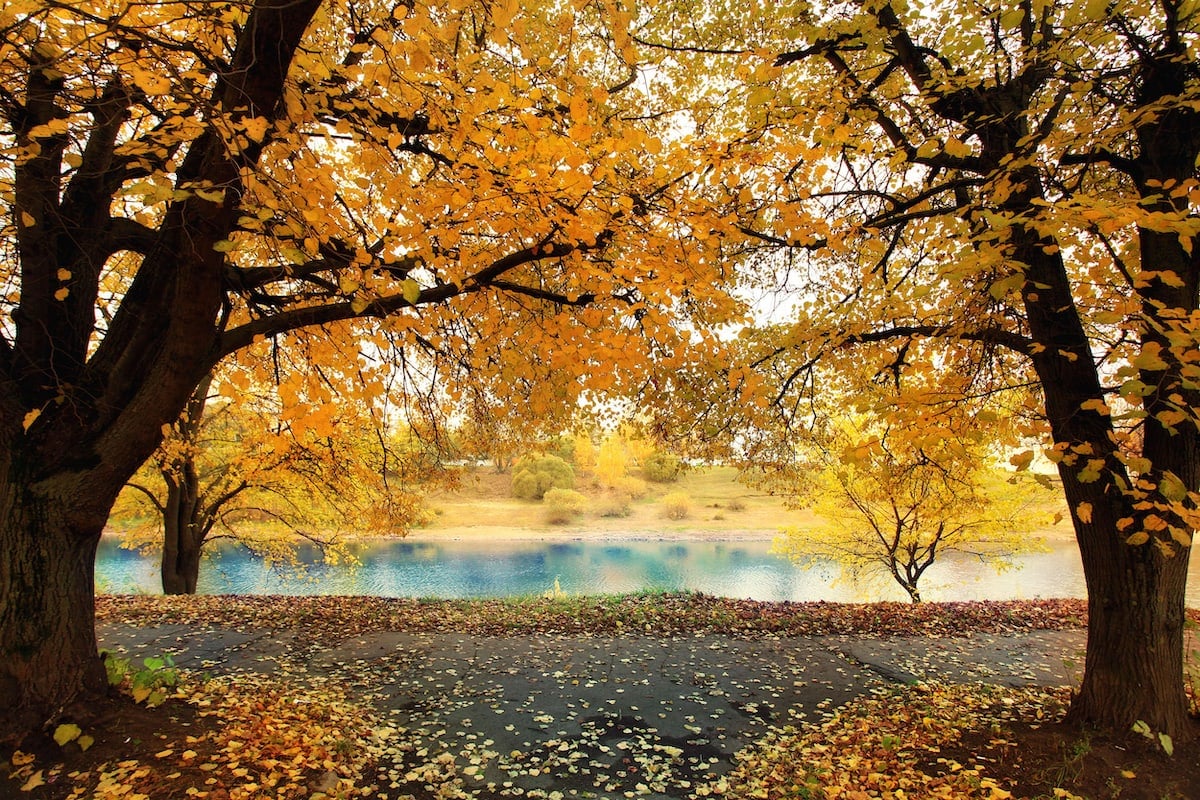
Few meteorological phenomena blend history, culture, and science as intriguingly as Indian Summer—a late-season warm spell that defies autumn’s chill. Originating from European settlers’ observations in North America, the term carries layers of misconception, from Indigenous misattributions to romanticized literary depictions. What began as a descriptive weather pattern evolved into a cultural curiosity, often conflated with folklore rather than hard meteorological data.
Beyond its poetic allure, Indian Summer is a product of precise atmospheric conditions: high-pressure systems, stable air masses, and the polar jet stream’s shifting behavior. Unlike heat waves or false springs, its occurrence marks a fleeting reprieve before winter’s grip tightens, with temperature spikes that can linger for days or weeks. From New England’s crisp air to Europe’s "Old Wives’ Summer," regional variations reveal how climate and culture intertwine to shape perceptions of this enigmatic weather event.
Defining Indian Summer: Origins, Terminology, and Common Misconceptions

The term "Indian Summer" evokes vivid imagery of golden autumn skies, crisp air, and unexpected warmth, yet its origins are steeped in colonial history and meteorological nuance. Emerging from the observations of early European settlers in North America, the phrase encapsulates a distinct late-season weather pattern that defies typical autumnal cooling. Despite its poetic resonance, the term carries layers of misinterpretation, particularly regarding its association with Indigenous cultures and its scientific classification. This section explores the linguistic evolution of "Indian Summer," contrasts it with similar climatic phenomena, and dissects the misconceptions that persist in both scientific and cultural discourse.
Linguistic Evolution and Historical Origins of the Term

The phrase "Indian Summer" first appeared in written records during the early 18th century, attributed to European settlers in New England. The term likely originated as a descriptive phrase to convey the unusual warmth and clarity of weather that occurred after the first frost of autumn. Early references suggest that settlers observed this phenomenon and linked it to the timing of Indigenous harvests or migrations, though the connection was more observational than cultural. By the mid-1800s, the term was firmly embedded in American English, appearing in diaries, scientific journals, and literary works.
A key moment in the documentation of "Indian Summer" occurred in 1803, when Thomas Jefferson referenced the phenomenon in a letter to John Adams, describing it as a "return of warm weather after the first frost." This early scientific acknowledgment laid the groundwork for its inclusion in meteorological discussions. The term gained broader recognition in the 19th century through publications like Henry David Thoreau’s journals, where he noted the "Indian summer" as a distinct climatic event in Concord, Massachusetts. Over time, the phrase transitioned from a regional observation to a widely recognized meteorological descriptor, though its etymology remained tied to Indigenous peoples without substantive cultural context.
Comparison with Similar Meteorological Phenomena
Indian Summer is often conflated with other late-season warm spells, such as False Spring, Heat Waves, or Early Winter Thaws, but each phenomenon exhibits distinct characteristics in temperature patterns, duration, and seasonal context. Below is a comparative analysis to clarify these differences:
Table of Contents
- Defining Indian Summer: Origins, Terminology, and Common Misconceptions
- Linguistic Evolution and Historical Origins of the Term
- Comparison with Similar Meteorological Phenomena
- Widespread Misconceptions About Indian Summer
- Timeline of Key Moments in the Documentation of Indian Summer
- Regional Variations in Terminology for Late-Autumn Warm Spells
- Meteorological Explanation: Causes, Conditions, and Scientific Breakdown
- Atmospheric Conditions Triggering Indian Summer: High-Pressure Systems and Air Mass Dynamics
- Role of the Polar Jet Stream in Creating Stable, Warm Conditions
- Step-by-Step Breakdown: High-Pressure Systems Leading to Unseasonably Warm Temperatures
- Comparison of Temperature and Humidity During Indian Summer vs. Typical Late Autumn
- Infographic-Style Table: Ideal Meteorological Conditions for Indian Summer
- Regional Variations in Indian Summer: Geographic Patterns and Climatic Influences
- Geographic Distribution and Frequency of Indian Summer
- Seasonal Timing and Duration Across Regions
- Topographic and Urban Influences on Indian Summer
- Anecdotal and Historical Accounts of Indian Summer’s Impact
- Indian Summer: - Occurs in late autumn (typically October to November in North America). - Defined by unseasonably warm temperatures (often 10–20°C above average) following the first frost. - Lasts 1–3 weeks, accompanied by clear skies and low humidity. - Unique to temperate regions, particularly the northeastern and north-central United States and southeastern Canada.
- False Spring: - Appears in early spring (March to April), disrupting winter conditions. - Characterized by mild temperatures (5–15°C above average) but does not replace frost entirely. - Short-lived, often 3–7 days, with unpredictable returns to cold weather. - Common in Europe and North America, where winter is more variable.
- Heat Wave: - Defined by prolonged periods of excessively hot weather (typically 5+ days above 32°C in summer). - Occurs in summer or early autumn, unrelated to seasonal transitions. - Primarily affects tropical and subtropical regions, though extreme heat waves can occur in temperate zones. - Linked to high humidity and solar radiation, unlike the dry clarity of Indian Summer.
- Early Winter Thaw: - A temporary rise in temperature (5–10°C) during winter, often due to warm air masses. - Lasts 1–5 days, followed by a return to freezing conditions. - More common in northern latitudes, including Canada and the northern United States.
The critical distinction lies in the seasonal timing and meteorological triggers. Indian Summer is a post-frost event, whereas False Spring and Heat Waves are pre-frost or summer phenomena. Early Winter Thaws lack the sustained warmth and atmospheric stability of Indian Summer.
Widespread Misconceptions About Indian Summer
One of the most enduring misconceptions about Indian Summer is its association with Native American traditions or cultural practices. The term does not originate from Indigenous languages or reflect any specific ceremonial or agricultural timing. Early settlers coined the phrase based on their observations, often projecting European frameworks onto unfamiliar climates. This misinterpretation persists in popular culture, where Indian Summer is romanticized as a time of Indigenous harvest festivals or spiritual significance—neither of which aligns with meteorological reality.
Another common misconception is that Indian Summer is a global phenomenon. In truth, it is regionally specific, primarily documented in North America and parts of Europe. The term does not apply to similar warm spells in tropical or subtropical climates, where seasonal transitions are less pronounced. Additionally, some assume Indian Summer is predictable or annual, but its occurrence varies yearly based on atmospheric conditions, such as high-pressure systems or jet stream shifts.
The romanticization of Indian Summer in literature and media further obscures its scientific definition. Works like Henry Wadsworth Longfellow’s "The Song of Hiawatha" (1855) and Edgar Allan Poe’s "The Bells" (1849) evoke the term poetically, often linking it to nostalgia or melancholy—rather than its actual climatic parameters. These artistic interpretations, while culturally significant, contribute to the confusion between myth and meteorology.
Timeline of Key Moments in the Documentation of Indian Summer
The evolution of Indian Summer from folklore to scientific recognition spans centuries, marked by key observations and publications. Below is a chronological overview of pivotal moments:
- 1778: Early references appear in Benjamin Franklin’s letters, where he notes "unusual warmth" in late autumn. - 1803: Thomas Jefferson documents the phenomenon in correspondence with John Adams, describing it as a "return of summer" after frost. - 1833: Henry David Thoreau records detailed observations of Indian Summer in his journals, linking it to specific dates in Concord, Massachusetts. - 1860s–1880s: The term gains traction in American almanacs and agricultural journals, where farmers note its impact on harvests. - 1920s: Meteorologists begin classifying Indian Summer as a distinct climatic event, distinguishing it from other warm spells. - 1950s–Present: The National Weather Service (NWS) and NOAA formalize criteria for Indian Summer, emphasizing its post-frost occurrence and regional specificity.
This timeline underscores the shift from colonial observation to scientific study, though the term’s cultural baggage remains unresolved.
Regional Variations in Terminology for Late-Autumn Warm Spells
The phenomenon of Indian Summer is described differently across cultures, reflecting local climates and linguistic traditions. Below is a comparative table of regional terms, their geographic scope, and cultural significance:
| Term | Geographic Location | Local Description | Cultural Significance | ||||||||||||||||||||||||||||||||||||||||||||||||||||||||||||
|---|---|---|---|---|---|---|---|---|---|---|---|---|---|---|---|---|---|---|---|---|---|---|---|---|---|---|---|---|---|---|---|---|---|---|---|---|---|---|---|---|---|---|---|---|---|---|---|---|---|---|---|---|---|---|---|---|---|---|---|---|---|---|---|
| Indian Summer | Northeastern and North-Central United States, Southeastern Canada | 1–3 weeks of unseasonable warmth (10–20°C above average) after first frost, with clear skies. | Colonial-derived term; no Indigenous cultural link. Symbolizes late harvest opportunities. | ||||||||||||||||||||||||||||||||||||||||||||||||||||||||||||
| Saruman Summer | United Kingdom (particularly England and Wales) | Mild, dry spell in late autumn, often in October or November, named after the character in The Lord of the Rings due to its "deceptive" warmth. | Pop culture reference; no traditional significance. | ||||||||||||||||||||||||||||||||||||||||||||||||||||||||||||
| Old Wives’ Summer | Europe (France, Germany, Scandinavia) | Short warm period in late summer or early autumn (August–September), often associated with harvest festivals. | Linked to folklore about women preparing for winter; no Indigenous connection. | ||||||||||||||||||||||||||||||||||||||||||||||||||||||||||||
| St. Martin’s Summer | Central Europe (Germany, Austria, Switzerland) | Warm spell around November 11th (St. Martin’s Day), often lasting a few days. | Cultural celebrations involving bonfires and wine festivals. | ||||||||||||||||||||||||||||||||||||||||||||||||||||||||||||
| Bai Yang (白露, "White Dew") | East Asia (China, Korea, Japan) | Late-autumn period marked by crisp air and early frost,
Meteorological Explanation: Causes, Conditions, and Scientific BreakdownThe phenomenon of Indian Summer arises from a complex interplay of atmospheric dynamics that defy typical seasonal expectations. Unlike conventional warm spells, Indian Summer is characterized by its delayed onset, prolonged stability, and distinct meteorological signatures. Understanding its formation requires dissecting high-pressure systems, air mass interactions, and the role of large-scale atmospheric patterns like the polar jet stream. These elements collectively create the warm, calm conditions that distinguish Indian Summer from other late-autumn or early-winter weather events. Below is a detailed examination of the scientific processes driving this meteorological curiosity, including regional variations, comparative analyses, and the influence of climate change.Atmospheric Conditions Triggering Indian Summer: High-Pressure Systems and Air Mass DynamicsIndian Summer is primarily initiated by the establishment of a subtropical high-pressure system, often referred to as a Bermuda High in North America or an Azores High in Europe. These systems are characterized by descending air masses that compress and warm adiabatically, suppressing cloud formation and reducing precipitation. The high-pressure center typically forms over the subtropical oceans, migrating inland as autumn progresses, particularly when the polar jet stream retreats northward. This migration allows the high-pressure system to dominate mid-latitude regions, creating a temperature inversion—a layer where warmer air overlies cooler air near the surface. The stability of these high-pressure systems is further reinforced by anticyclonic wind patterns, which circulate clockwise in the Northern Hemisphere and counterclockwise in the Southern Hemisphere. These winds inhibit the mixing of air layers, trapping warmth near the ground while allowing cooler air to settle at higher altitudes. The result is a radiation inversion, where clear skies at night prevent heat loss, and solar radiation during the day warms the surface efficiently. This process is amplified in regions with minimal topographical disruption, such as flat plains or gentle valleys, where cold air drainage is limited. Key atmospheric indicators of Indian Summer formation include:Indian Summer thrives in conditions where high-pressure systems persist for 3–10 days, maintaining stable, warm temperatures while blocking the advance of polar air masses. Role of the Polar Jet Stream in Creating Stable, Warm ConditionsThe polar jet stream, a fast-moving ribbon of air flowing from west to east at altitudes of 8–12 km (5–7 miles), plays a pivotal role in shaping Indian Summer events. During late autumn, the jet stream typically shifts northward, weakening its influence over mid-latitude regions. This retreat allows the subtropical jet stream to dominate, steering high-pressure systems toward landmasses. The interaction between these jet streams creates a blocking pattern, where the polar jet stream becomes stationary or meanders, trapping the high-pressure system in place. Visualizing the jet stream’s position during Indian Summer: Imagine a meridional (north-south) flow rather than the usual zonal (west-east) pattern. The polar jet stream may exhibit large-amplitude ridges over regions like the Great Lakes (North America), Central Europe, or East Asia, while troughs develop over the northern Atlantic or Pacific. This configuration forces cold air to pool in the high latitudes, preventing its southward advance while allowing subtropical air to surge northward. Satellite imagery during Indian Summer often reveals a split jet stream, with the polar branch weakened and the subtropical branch strengthened, further stabilizing the warm anomaly. The jet stream’s influence extends beyond temperature regulation—it also governs humidity levels. As the subtropical jet stream dominates, it transports moisture-laden air from the Gulf of Mexico or Mediterranean toward land, but the high-pressure system’s subsidence inhibits precipitation. This creates a dry, warm air mass with relative humidity often below 50%, contrasting sharply with the damp, chilly conditions of typical late autumn.Step-by-Step Breakdown: High-Pressure Systems Leading to Unseasonably Warm TemperaturesThe progression of an Indian Summer event can be outlined in five distinct meteorological stages, each contributing to the warm anomaly: 1. Formation of the Subtropical High-Pressure SystemAn Indian Summer event is essentially a metrological "pause button" on the transition to winter, where high-pressure dominance overrides the seasonal cooling trend. Comparison of Temperature and Humidity During Indian Summer vs. Typical Late AutumnRegions experiencing Indian Summer often see temperature anomalies of 5–15°C (9–27°F) above seasonal norms, accompanied by dramatic shifts in humidity and wind patterns. Below is a comparative analysis for a region like Chicago, Illinois (USA), during late November:
Infographic-Style Table: Ideal Meteorological Conditions for Indian SummerBelow is a structured summary of the optimal conditions required for Indian Summer to develop, formatted for clarity:
Topographic and Urban Influences on Indian SummerLocal geography and human settlement patterns significantly modify Indian Summer’s intensity and duration. Urban heat islands, proximity to large bodies of water, and mountainous terrain create microclimates that either amplify or suppress the phenomenon.Anecdotal and Historical Accounts of Indian Summer’s ImpactIndian Summer has shaped agricultural traditions, cultural folklore, and even military history across regions. Below are historical and anecdotal examples illustrating its significance:Indian Summer stands at the intersection of science and storytelling, where meteorological precision clashes with enduring myths. While its origins trace back to colonial-era observations, modern climatology refines its definition—tying it to high-pressure dominance and seasonal transitions. Yet, the term persists, a reminder of how language and weather intertwine, leaving behind a legacy as warm as the air it describes. Understanding its mechanics not only clarifies a weather anomaly but also challenges how society interprets nature through the lens of history. |
Leave a Comment
Comments are moderated before appearing. The data you submit is processed according to the Privacy Policy of Velirium.