What Is An Indian Summer Explained Simply
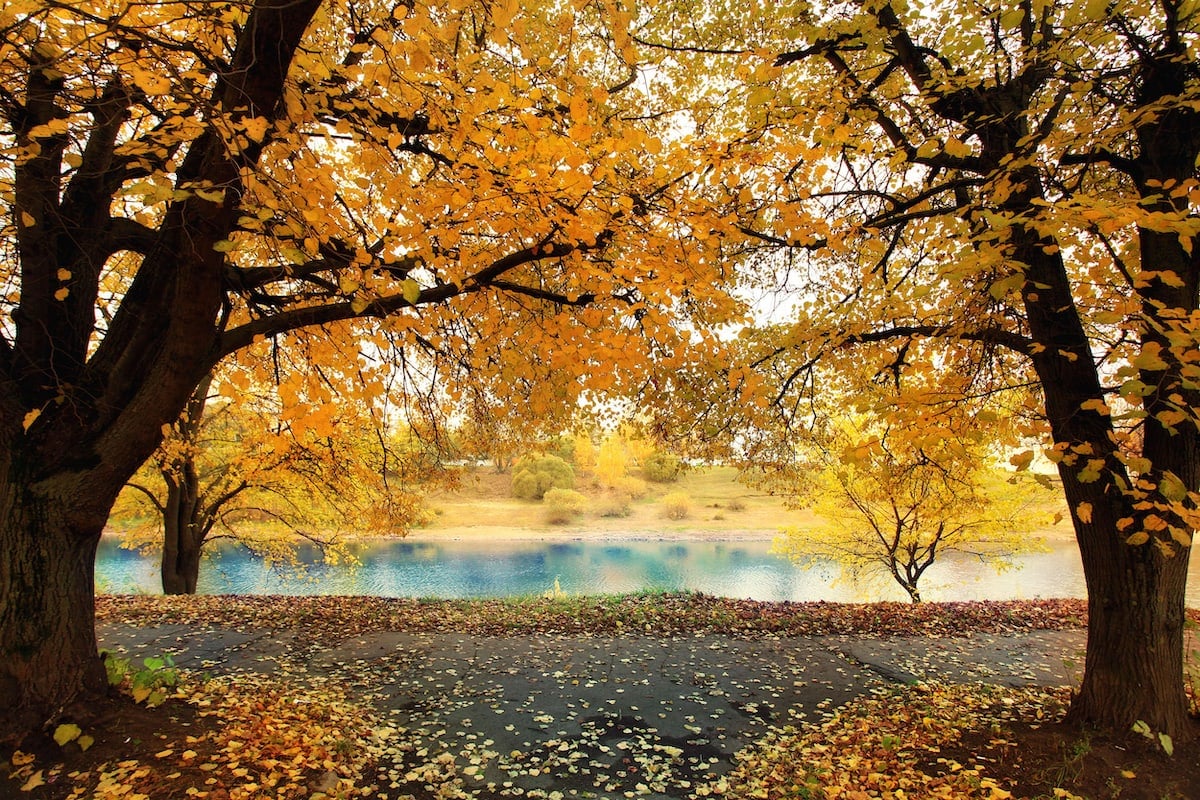
Autumn’s unexpected warmth arrives with a name steeped in folklore and science: Indian Summer. This meteorological phenomenon defies seasonal logic, gifting crisp October skies with temperatures that mimic summer’s embrace. Unlike heatwaves, Indian Summer emerges from high-pressure systems and lingering heat, creating a fleeting but vivid interlude between harvest and frost. Its origins trace back to colonial America, where settlers mistakenly attributed the warmth to Native American smoke signals—though the truth lies in atmospheric quirks far more poetic than myth.
From the Great Lakes to European vineyards, Indian Summer reshapes daily life, extending outdoor activities while posing hidden health risks. Scientists now warn that climate change may intensify these episodes, turning a cherished tradition into a harbinger of longer, hotter autumns. The question remains: Can we preserve the magic of this seasonal anomaly, or will it become just another casualty of a warming world? The answers lie in the interplay of weather patterns, cultural memory, and the delicate balance of Earth’s climate systems.
Understanding Indian Summer: Definition and Core Characteristics

Indian Summer represents a distinct meteorological phenomenon characterized by an unseasonably warm period occurring after the first frost or during the autumn season in temperate regions, particularly in North America and parts of Europe. Unlike typical late-season warmth or heatwaves, Indian Summer is marked by a sudden return of summer-like conditions—often accompanied by clear skies, calm winds, and a noticeable drop in humidity—after a period of early winter chill. This phenomenon defies conventional seasonal expectations, creating a brief but vivid reprieve from the onset of cold weather, which has fascinated meteorologists, historians, and cultural observers for centuries.
The term encapsulates a specific interplay of atmospheric conditions, including high-pressure systems, stable air masses, and subtle shifts in wind patterns, which collectively produce a deceptive yet scientifically explainable resurgence of warmth. Understanding its core characteristics—such as temperature ranges, humidity levels, and the duration of the event—requires examining the meteorological mechanisms that distinguish it from related phenomena like heatwaves, false springs, or polar vortex disruptions. Additionally, its historical and cultural significance, rooted in folklore and early scientific observations, adds depth to the phenomenon’s broader interpretation.

Meteorological Definition and Distinction from Similar Phenomena
Indian Summer is defined by the National Weather Service (NWS) as a period of unseasonably warm weather occurring after the first frost or freeze of autumn, typically between late September and early November in the Northern Hemisphere. Unlike a heatwave, which is characterized by prolonged, excessively hot temperatures (often exceeding 90°F or 32°C for multiple days), Indian Summer is a short-lived event lasting 24 to 72 hours, with temperatures ranging from 60°F to 80°F (15°C to 27°C)—warm enough to feel summer-like but not extreme. Humidity levels during Indian Summer are notably low (20% to 40%), creating a crisp, dry atmosphere that contrasts sharply with the muggy conditions of a typical summer heatwave.
The phenomenon is driven by a high-pressure system that settles over a region, allowing southerly or southwesterly winds to transport warm air from subtropical latitudes. This warm air mass is often dry adiabatically compressed as it descends, leading to clear skies and minimal cloud cover. In contrast, heatwaves are usually associated with stagnant air masses trapped under a heat dome, where temperatures rise due to radiative heating rather than advective (wind-driven) warmth.
Table of Contents
- Understanding Indian Summer: Definition and Core Characteristics
- Meteorological Definition and Distinction from Similar Phenomena
- Temperature Ranges, Humidity Levels, and Atmospheric Conditions
- Comparison Table: Indian Summer vs. Related Meteorological Phenomena
- Historical Origins and Cultural References
- Scientific Explanation: Causes and Meteorological Mechanisms of Indian Summer
- High-Pressure Systems and Sinking Air Masses
- Role of the Polar Jet Stream and Seasonal Shifts
- Residual Heat and Clear-Sky Feedback Loop
- Geographical Regions Prone to Indian Summer
- Regional Variations in Indian Summer: Global Hotspots and Localized Phenomena
- Global Distribution Map and Notable Regions
- Cities Prone to Indian Summer: Dates, Duration, and Historical Events
- Hemispheric Contrasts: Solar Angles and Ocean Currents
- Urban Heat Islands and Amplified Indian Summer Effects
- Cultural and Historical Significance of Indian Summer
- Romanticization in Art, Music, and Media
- Historical Influence on Agriculture and Outdoor Activities
- Indigenous and Regional Names for Indian Summer
- Economic and Festival Impacts of Indian Summer
- Literary and Historical Figures Who Celebrated Indian Summer
- Impact on Daily Life: Effects on Health, Economy, and Activities
- Health Implications and Mitigation Strategies
- Economic Adjustments and Industry Adaptations
- Outdoor Activities and Safety Considerations
- Psychological and Behavioral Effects
- Case Study: Construction Industry Adaptations During Indian Summer
- Climate Change and the Future of Indian Summer
- Projected Climate Impacts on Indian Summer Frequency and Intensity
- Historical vs. Modern Patterns: Temperature Anomalies and Duration Changes
- Scientific Predictions Under Different Emissions Scenarios
- Adaptive Measures for Communities
A key differentiator is the timing and regional specificity of Indian Summer. While heatwaves can occur at any time, Indian Summer is autumnal and localized, primarily affecting regions with continental climates such as the Midwest and Northeast United States, Southern Canada, and parts of Northern Europe. The term is rarely used in tropical or coastal regions, where seasonal temperature fluctuations are less pronounced.
Temperature Ranges, Humidity Levels, and Atmospheric Conditions
The atmospheric conditions during an Indian Summer create a unique microclimate that sets it apart from other seasonal transitions. Temperature fluctuations are the most noticeable feature, with daytime highs often reaching 10°F to 20°F (5°C to 11°C) above average autumn temperatures, while nighttime lows remain mild, sometimes hovering around 50°F (10°C). This diurnal temperature variation is a hallmark of Indian Summer, resulting from the radiative cooling of the ground at night under clear skies, which contrasts with the warm air retained during the day.
Humidity plays a critical role in shaping the perceived warmth. Unlike the high humidity (60% to 80%) associated with tropical heatwaves, Indian Summer is characterized by low relative humidity (20% to 40%), making the heat feel dry and comfortable rather than oppressive. This dryness is attributed to the subsidence of air within the high-pressure system, which inhibits cloud formation and precipitation. The lack of moisture also contributes to exceptional visibility and crisp, cool nights, further enhancing the phenomenon’s distinct character.
Atmospheric pressure gradients are another defining factor. Indian Summer typically occurs under a strong subtropical high-pressure system, which blocks the progression of cold fronts from the north. The pressure gradient force drives light, variable winds, often from the south or southwest, which transport warm air from lower latitudes. In some cases, a weak cold front may stall nearby, creating a temperature inversion where warmer air overlays cooler air near the surface, trapping pollutants and contributing to the phenomenon’s longevity.
Comparison Table: Indian Summer vs. Related Meteorological Phenomena
To clarify how Indian Summer differs from other seasonal anomalies, the following table outlines key distinctions based on duration, cause, regional occurrence, and atmospheric triggers:
| Feature | Indian Summer | False Spring | Heat Dome | Polar Vortex Disruption |
|---|---|---|---|---|
| Seasonal Timing | Late autumn (post-first frost, Sept–Nov in Northern Hemisphere) | Early spring (Feb–Mar, before last frost) | Any season (peaks in summer, but can occur in autumn) | Winter (Jan–Mar, during polar vortex collapse) |
| Duration | 24–72 hours (short-lived) | 3–7 days (brief but disruptive) | 3–14 days (prolonged) | Weeks to months (widespread cold anomalies) |
| Primary Cause | High-pressure system with southerly winds transporting warm air | Temporary breakdown of polar jet stream, allowing warm air intrusion | Stagnant high-pressure system trapping heat via radiative forcing | Weakening of polar vortex, allowing cold Arctic air to spill south |
| Temperature Range | 60°F–80°F (15°C–27°C), dry and crisp | 65°F–85°F (18°C–29°C), often humid | 90°F+ (32°C+), high humidity, oppressive | -10°F to 20°F (-23°C to -7°C), extreme cold with wind chill |
| Humidity Levels | Low (20%–40%), dry air | Moderate to high (50%–70%), variable | High (70%–90%), muggy conditions | Low to moderate (varies with snow cover) |
| Regional Occurrence | Midwest/Northeast U.S., Southern Canada, parts of Europe | Northeastern U.S., Eastern Canada, Northern Europe | Global (common in U.S. South, Middle East, South Asia) | Northern Hemisphere mid-latitudes (U.S., Europe, Asia) |
| Atmospheric Triggers | Subtropical high-pressure ridge, light southerly winds | Sudden stratospheric warming (SSW) weakening jet stream | Persistent ridge in upper atmosphere, subsidence warming | Collapse of polar vortex due to stratospheric warming |
This comparison highlights how Indian Summer’s brief, dry warmth contrasts with the prolonged heat of a dome, the deceptive warmth of false spring, or the frigid anomalies of a disrupted polar vortex. Each phenomenon is driven by distinct atmospheric dynamics, yet they all reflect the interplay between large-scale pressure systems and seasonal transitions.
Historical Origins and Cultural References
The term "Indian Summer" emerged in 18th-century America, with its first documented usage appearing in 1778 in a letter by John Farrell of Philadelphia, who described the phenomenon as a "gentle season, which
Scientific Explanation: Causes and Meteorological Mechanisms of Indian Summer
Indian Summer emerges as a meteorological phenomenon driven by complex interactions between atmospheric pressure systems, residual heat, and seasonal shifts in global wind patterns. Unlike typical warm spells, its occurrence hinges on specific conditions—high-pressure dominance, stable air masses, and the behavior of the Polar Jet Stream—that create prolonged warmth during autumn. Understanding these mechanisms reveals why regions like North America’s Midwest, Central Europe, and parts of East Asia experience unseasonably balmy days in late September or October, often accompanied by crisp, clear skies.
High-Pressure Systems and Sinking Air Masses
The formation of Indian Summer begins with the establishment of a high-pressure system over a region, typically in the mid-latitudes. These systems, often referred to as blocking highs, stall or slow the progression of frontal systems that would otherwise bring cooler air. As air within the high-pressure zone sinks toward the surface, it undergoes adiabatic compression, warming as it descends. This process creates a subsidence inversion, where warmer air traps cooler air near the ground, suppressing cloud formation and allowing sunlight to heat the surface efficiently.
Visual Description for Designers: - Diagram 1 (Cross-Sectional View): Illustrate a high-pressure system with descending air arrows curving toward the surface, forming a dome-shaped structure. Label the inversion layer where temperature increases with altitude. Include a ground-level depiction of clear skies with minimal cloud cover. - Diagram 2 (Surface Pressure Map): Show a large, stationary high-pressure cell (e.g., 1030 hPa) centered over a region (e.g., the Great Lakes or Central Europe), surrounded by weaker pressure gradients. Use color gradients to indicate temperature anomalies (+5°C to +10°C above seasonal norms).
The sinking air also inhibits precipitation, as moisture is forced to condense at higher altitudes where temperatures are colder. This dry, stable air mass further enhances the warming effect by reducing evaporative cooling and allowing solar radiation to penetrate unhindered. Studies indicate that these high-pressure systems often persist for 3–10 days, depending on their strength and the absence of competing weather systems.
Role of the Polar Jet Stream and Seasonal Shifts
The Polar Jet Stream, a fast-moving ribbon of air near the tropopause, plays a critical role in triggering Indian Summer by shifting its position. During autumn, the jet stream typically migrates southward as the Arctic cools and the temperature gradient between polar and tropical air weakens. However, meridional flows—large north-south undulations—can develop, creating Rossby waves that cause the jet stream to loop or stall over specific regions.
When the jet stream adopts a zonal wave pattern (e.g., a ridge), it directs warm, subtropical air northward, displacing cooler air masses. This configuration traps the high-pressure system responsible for Indian Summer, prolonging the warm spell. For example: - In North America, a ridge over the Great Lakes or Midwest can funnel warm air from the Gulf of Mexico, while a trough over the East Coast blocks cooler maritime air. - In Europe, a blocked jet stream over Scandinavia or the British Isles allows Mediterranean air to surge northward, creating "false autumn" conditions. - In East Asia, the jet stream’s interaction with the Tibetan Plateau can deflect warm air from the Indian Ocean toward China or Japan, extending summer-like warmth into October.
Seasonal Variations in Jet Stream Behavior: - Early Autumn (September): The jet stream remains relatively active, but weakening gradients allow temporary ridges to form. - Late Autumn (October–November): The jet stream strengthens again, but persistent ridges—often linked to Arctic amplification—can still produce Indian Summer episodes. - Climate Models suggest that global warming may increase the frequency of persistent ridges due to reduced Arctic ice, altering the jet stream’s typical behavior.
Residual Heat and Clear-Sky Feedback Loop
The sustained warmth of Indian Summer is not solely due to current atmospheric conditions but also relies on residual heat stored in the soil, water bodies, and lower atmosphere during summer. This heat is gradually released over time, especially under clear skies that minimize heat loss through radiation. The process involves: 1. Soil and Ground Heat: During summer, the ground absorbs solar energy, warming subsoil layers. In autumn, this heat conducts upward, warming the air near the surface. 2. Lake and Ocean Influence: Large water bodies (e.g., the Great Lakes, Baltic Sea, or East China Sea) retain heat longer than land. When high-pressure systems prevail, these bodies release stored heat via sensible heat flux, raising air temperatures. 3. Atmospheric Stability: Clear skies reduce longwave radiation loss, allowing the surface to retain heat overnight. The lack of cloud cover also enhances shortwave solar radiation during the day, creating a positive feedback loop.
Step-by-Step Mechanism: 1. Summer Heat Accumulation: Excessive solar radiation heats soil, water, and the lower atmosphere beyond seasonal norms. 2. Autumnal Cooling Delay: A high-pressure system stalls, suppressing cooler air advection and precipitation. 3. Heat Release: Stored heat in the ground and water gradually warms the overlying air, while clear skies prevent heat dissipation. 4. Temperature Inversion Maintenance: The sinking air in the high-pressure system creates a stable layer, trapping warmth near the surface. 5. Prolonged Warmth: Temperatures remain 5–15°C above average for several days, with minimal diurnal variation (cool nights remain mild).
Example: In 2019, the Midwest U.S. experienced an Indian Summer in late September, with Chicago recording temperatures near 32°C (90°F)—a full 12°C (22°F) above normal—due to residual heat from Lake Michigan and a blocking high-pressure system.
Geographical Regions Prone to Indian Summer
Indian Summer is most commonly observed in mid-latitude regions where high-pressure systems frequently stall and residual heat plays a significant role. The following table highlights the most susceptible areas, categorized by continent, with key meteorological triggers:
| Region | Frequency | Key Meteorological Triggers | Notable Examples | ||||||||||||||||||||||||||||||||||||||||||||||||||||||||||||||||||||||||||||||||||||||||||
|---|---|---|---|---|---|---|---|---|---|---|---|---|---|---|---|---|---|---|---|---|---|---|---|---|---|---|---|---|---|---|---|---|---|---|---|---|---|---|---|---|---|---|---|---|---|---|---|---|---|---|---|---|---|---|---|---|---|---|---|---|---|---|---|---|---|---|---|---|---|---|---|---|---|---|---|---|---|---|---|---|---|---|---|---|---|---|---|---|---|---|---|---|---|
| North America (Great Lakes, Midwest, Northeast U.S., Ontario) | 1–2 episodes per decade, peak in late September |
|
|
||||||||||||||||||||||||||||||||||||||||||||||||||||||||||||||||||||||||||||||||||||||||||
| Europe (Central Europe, Benelux, Northern France, UK) | 2–3 episodes per decade, often in October |
|
|
||||||||||||||||||||||||||||||||||||||||||||||||||||||||||||||||||||||||||||||||||||||||||
| Asia (East China, Korean Peninsula, Hokkaido, Japan) | 3–5 episodes per decade, late September–October |
|
Urban Heat Islands and Amplified Indian Summer EffectsMetropolitan areas exacerbate Indian Summer through the urban heat island (UHI) effect, where concrete, asphalt, and reduced vegetation elevate local temperatures by 2–10°F (1–5Cultural and Historical Significance of Indian SummerIndian Summer transcends its meteorological definition, embedding itself deeply into cultural narratives, historical practices, and regional traditions across the globe. This fleeting climatic phenomenon has inspired poets, shaped agricultural cycles, and become a muse for artists, while also influencing festivals and economic activities tied to seasonal transitions. Its portrayal in literature and media often evokes nostalgia, warmth, and a bittersweet acknowledgment of time’s passage—making it a symbol of both renewal and impermanence. The cultural resonance of Indian Summer lies in its ability to mark a liminal period between seasons, a threshold where nature seems to pause, offering one last burst of vitality before winter’s grip. This ambiance has been immortalized in art, music, and folklore, often as a metaphor for fleeting beauty or the resilience of life amid change. Historically, communities adapted their lifestyles around this phenomenon, from harvest festivals to hunting expeditions, ensuring survival and celebration in harmony with nature’s rhythms.Romanticization in Art, Music, and MediaIndian Summer’s ethereal quality has made it a recurring motif in creative expressions, particularly in poetry and visual arts. One of the most celebrated literary depictions comes from Henry Wadsworth Longfellow, whose 1858 poem "The Song of Hiawatha" includes the iconic lines:*"By the shores of Gitche Gumee, By the shining Big-Sea-Water, Stood the wigwam of Nokomis, Daughter of the Moon, Nokomis."*While not explicitly about Indian Summer, Longfellow’s works often evoke autumnal warmth, and the term later became synonymous with such nostalgic imagery. In British literature, poets like John Keats and Percy Bysshe Shelley referenced the golden hues of late autumn, though the phrase "Indian Summer" gained traction in American and European folklore by the 19th century. Cinema and music have also embraced this phenomenon. Films like "Autumn in New York" (2000) and "The Royal Tenenbaums" (2001) use Indian Summer as a backdrop for introspective storytelling, while songs such as The Beatles’ "Here Comes the Sun" (1969) and Simon & Garfunkel’s "Scarborough Fair/Canticle" (1966) capture the bittersweet melancholy of late-season warmth. In Japanese culture, the concept of "Kōyō" (red leaves) similarly symbolizes transience, often paired with the idea of mono no aware—the pathos of things. Historical Influence on Agriculture and Outdoor ActivitiesBefore modern forecasting, Indian Summer was a critical indicator for farmers and hunters, dictating the timing of harvests, migrations, and survival strategies. In North America, Indigenous tribes such as the Lakota and Cherokee tracked its arrival to plan hunting expeditions, as animals like deer would fatten on late-season foliage before winter. European settlers later adopted these cues, using the warm spell to extend grazing periods for livestock or dry crops before storage. Agricultural festivals often coincided with Indian Summer, particularly in regions where harvests relied on prolonged dry weather. In France, the "Fête des Vendanges" (Wine Harvest Festival) in Bordeaux and Burgundy frequently falls in late September or October, aligning with the region’s Indian Summer. The warm, sunny days accelerate grape ripening, improving sugar content and wine quality. Similarly, apple orchards in the U.S.—such as those in Michigan’s "Apple Country"—time their harvests to avoid early frosts, with Indian Summer providing an ideal window for picking crisp, flavorful fruit. Travel and trade also adapted to this phenomenon. In 19th-century Europe, the "Autumnal Tour" became a fashionable tradition among the aristocracy, who traveled to health resorts like Switzerland’s Engadine Valley or Italy’s Lake Como to escape urban pollution and enjoy the mild weather. The term "Indian Summer" itself may have originated from German settlers in Pennsylvania, who associated the warm spell with the hunting seasons of Native American tribes.Indigenous and Regional Names for Indian SummerThe phenomenon’s cultural significance varies globally, reflected in diverse linguistic and traditional associations. Below is a comparative table of regional names and their linked customs:
Economic and Festival Impacts of Indian SummerIndian Summer’s arrival often coincides with peak economic activities in seasonal industries. In wine-producing regions, such as California’s Napa Valley or Spain’s Rioja, the warm, sunny days accelerate grape ripening, enhancing flavor profiles and increasing yields. The 2019 harvest in Bordeaux, for example, was extended by an Indian Summer spell, allowing winemakers to delay picking until ideal sugar levels were achieved—resulting in higher-quality vintages and premium pricing. Tourism also benefits from this phenomenon. Apple orchards in Washington State and Michigan attract millions of visitors during Indian Summer for picking festivals, cider pressing, and pumpkin patches. The Great New York State Fair, held annually in Syracuse, often extends its autumn events to capitalize on the warm weather, drawing over 1.5 million attendees in peak seasons. Similarly, Japan’s Nikko and Kyoto see surges in tourism during Kōyō season, as visitors flock to temples and shrines adorned with vibrant autumn foliage. In agricultural economies, Indian Summer can be a double-edged sword. While it prolongs growing seasons, unexpected late frosts or extended dry spells can damage crops. In 2014, a premature Indian Summer in the U.S. Midwest led to early planting of winter wheat, only for a subsequent freeze to devastate yields—a reminder of the phenomenon’s unpredictability.Literary and Historical Figures Who Celebrated Indian SummerThe allure of Indian Summer has inspired countless writers, philosophers, and historians to reflect on its symbolic power. Below are notable figures who referenced the phenomenon in their works, along with excerpts that highlight its cultural imprint: |
Leave a Comment
Comments are moderated before appearing. The data you submit is processed according to the Privacy Policy of Velirium.