What Is A Trump Account For Kids Explained Simply

Financial literacy for children is no longer an abstract concept but a tangible tool, and one platform gaining attention is the Trump Account. Designed specifically for young minds, this account blends savings, spending, and education into a single digital experience. Unlike traditional bank accounts or generic prepaid cards, Trump Accounts are tailored with vibrant branding, playful mascots, and interactive features to make money management feel like a game rather than a chore. The appeal lies in its simplicity—parents can introduce their children to the basics of budgeting, saving, and earning without overwhelming them with complex financial jargon.
Marketed as a beginner-friendly alternative, Trump Accounts stand out with their focus on engagement and real-world application. Visual elements like bright logos, animated characters, and progress-tracking tools create an environment where kids can visualize their financial growth. Whether it’s setting savings goals for a new toy or learning how interest works through gamified challenges, the account’s design ensures that every interaction reinforces practical financial habits. For parents, the platform offers controls to monitor spending, set allowances, and even block certain purchases, making it a versatile tool for instilling responsibility early.
Understanding Trump Accounts for Kids: Design and Educational Framework
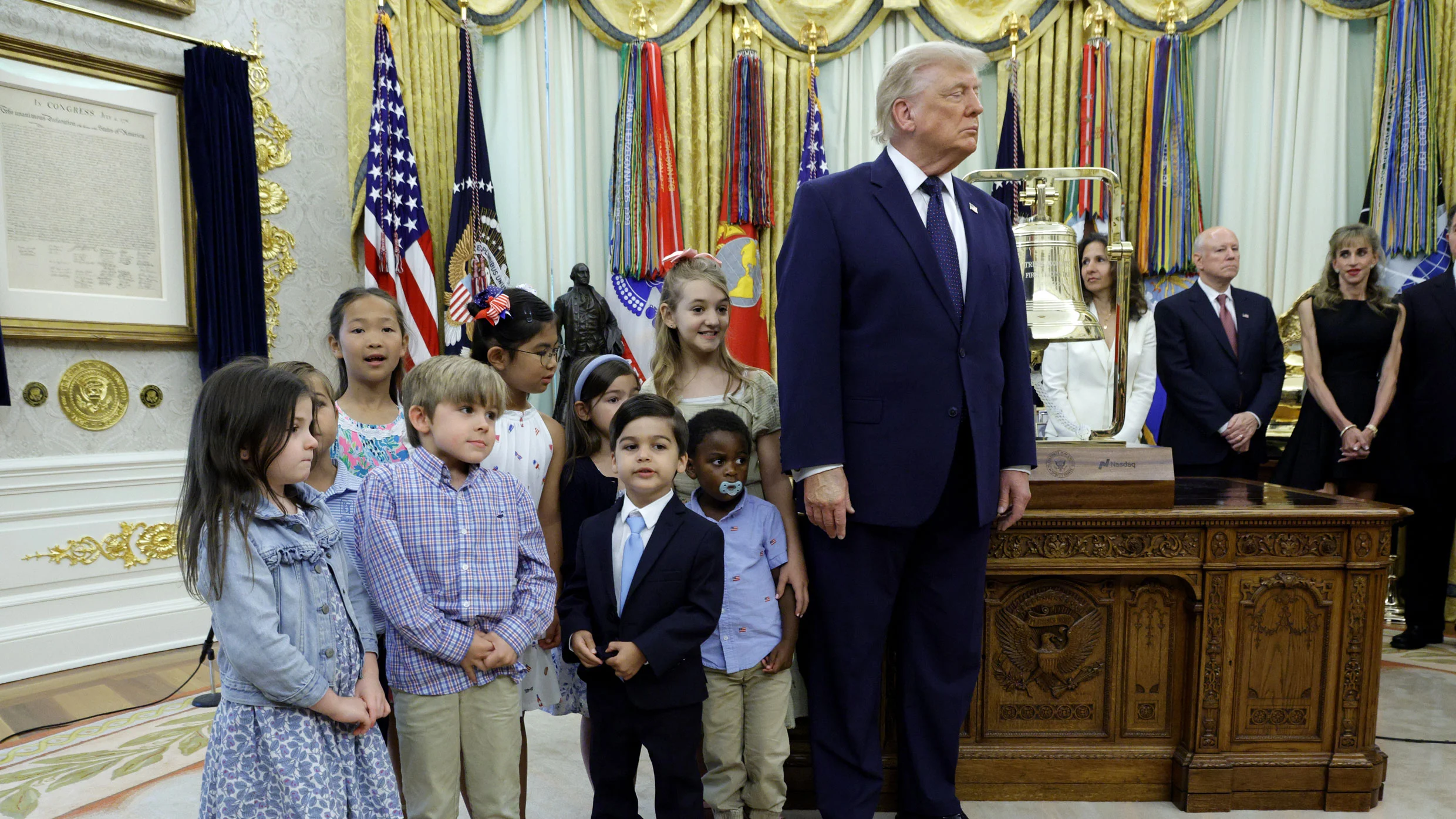
Trump Accounts for Kids represent a specialized financial product tailored to introduce children to the fundamentals of money management in an engaging, age-appropriate manner. Unlike traditional savings accounts or generic prepaid cards, these accounts are often branded with themes that resonate with young users—such as vibrant colors, playful mascots, or characters inspired by popular culture—to create an immersive learning experience. The concept blends financial education with gamification, ensuring that children grasp basic economic principles while developing habits like saving, budgeting, and responsible spending. This approach distinguishes Trump Accounts from conventional tools, which may lack interactive elements or fail to align with a child’s cognitive and developmental stage.
The design philosophy behind Trump Accounts prioritizes accessibility and relatability. For instance, promotional materials frequently feature bright, eye-catching visuals—such as cartoon animals, superheroes, or animated symbols—to symbolize concepts like saving (e.g., a piggy bank mascot) or spending (e.g., a shopping cart). Slogans often emphasize empowerment, such as "Kids Learn, Families Grow" or "Your Child’s First Step to Financial Smart," reinforcing the product’s mission to foster long-term financial literacy. These branding choices are strategically crafted to appeal to both parents, who seek practical tools for teaching their children, and kids, who are drawn to fun, recognizable imagery.

Core Features of Trump Accounts: Differentiating from Traditional Financial Tools
Trump Accounts are engineered to stand out in the crowded market of kid-friendly financial products by integrating unique features that address specific pain points for parents and children. Below is a comparative analysis highlighting how these accounts differ from alternatives like Greenlight, FamZoo, and traditional savings accounts, focusing on usability, educational value, and parental oversight.
Comparison Table: Trump Accounts vs. Alternative Kid-Friendly Financial Products
Table of Contents
- Understanding Trump Accounts for Kids: Design and Educational Framework
- Core Features of Trump Accounts: Differentiating from Traditional Financial Tools
- Key Appeal Factors for Parents: Why Trump Accounts Stand Out
- How Trump Accounts Work: Step-by-Step Setup and Usage
- Account Eligibility and Required Documents
- Step-by-Step Account Setup Process for Parents
- Funding a Trump Account: Methods, Limits, and Restrictions
- Educational Features: Teaching Financial Skills Through Trump Accounts
- Interactive Lessons and Gamified Tools for Financial Learning
- Real-World Financial Scenarios and Simulations
- Age-Specific Curriculum Breakdown
- Teaching Delayed Gratification Through Savings Milestones
- Addressing Common Financial Mistakes with Alerts and Guidance
| Feature | Trump Account | Greenlight | FamZoo | Traditional Savings | ||
|---|---|---|---|---|---|---|
| Target Age Group | 4–12 years (adjustable parental controls for younger/older kids) | 6–18 years (with parental oversight for younger children) | 5–17 years (family-based financial management) | All ages (no lower age limit, but typically marketed to teens/adults) | ||
| Key Learning Focus |
|
|
|
— |
|
|
| Fees/Charges |
|
|
|
|
||
| Parent Controls |
|
|
|
|
||
The table above illustrates how Trump Accounts prioritize interactive learning and parental engagement while maintaining simplicity for young users. Unlike traditional savings accounts, which often lack gamification or real-time feedback, Trump Accounts incorporate visual progress trackers (e.g., a digital thermometer filling up as savings grow) and achievement badges to reinforce positive financial behaviors. This aligns with cognitive development theories, which suggest that children learn best through repetition, immediate rewards, and relatable scenarios.
Key Appeal Factors for Parents: Why Trump Accounts Stand Out
Parents evaluating financial tools for their children often prioritize products that combine education, security, and ease of use. Trump Accounts address these needs through a curated set of features designed to simplify financial lessons while minimizing risks. Below are the most compelling aspects that differentiate these accounts from competitors:
- Age-Adaptive Educational Content Trump Accounts employ story-driven modules that teach financial concepts through narratives, such as saving for a birthday gift or understanding the value of delayed gratification. For example, a character named "Trump the Tiger" might guide a child through a scenario where they must choose between buying a toy immediately or saving for a bigger prize later. This approach leverages narrative psychology, where children absorb lessons more effectively when framed as stories rather than abstract rules.
- Gamified Saving Goals The platform allows parents to set customizable savings goals (e.g., "$50 for a new video game") and tracks progress with interactive visuals. Children can watch their savings "grow" in a digital piggy bank or see a progress bar fill up, which triggers dopamine-driven motivation. Unlike traditional accounts, where savings are static numbers, Trump Accounts transform abstract financial targets into tangible, exciting milestones.
- Parental Oversight with Minimal Hassle Parents receive daily or weekly reports detailing their child’s spending habits, including categories like "Entertainment," "Education," or "Impulse Buys." The dashboard also highlights teachable moments, such as when a child repeatedly spends on non-essential items. This feature reduces the need for constant monitoring while providing actionable insights. For instance, if a child spends 60% of their allowance on snacks, the system might suggest a discussion on budget prioritization.
- Security and Fraud Protection Trump Accounts integrate multi-layered security, including: - Biometric verification (fingerprint or facial recognition for older kids). - Instant transaction alerts for parents and children. - Virtual card limits that can be adjusted remotely (e.g., disabling online purchases). These measures address a critical concern for parents: preventing unauthorized spending or exposure to online scams. Unlike prepaid cards, which may lack real-time oversight, Trump Accounts offer 24/7 activity tracking with options to freeze the card instantly.
- Community and Social Learning Some Trump Account variants include peer challenges,
How Trump Accounts Work: Step-by-Step Setup and Usage
Trump Accounts for Kids provide a structured, parent-controlled financial platform designed to teach children about money management, savings, and responsible spending. The account integrates digital banking features with educational tools, allowing parents to monitor transactions, set spending limits, and guide their child’s financial behavior. The setup process involves verification steps to ensure security, followed by customizable configurations to align with the child’s age and financial literacy level. Understanding these steps—from account creation to transaction management—helps parents leverage the platform effectively while instilling foundational financial habits in their children.
The account operates on a hybrid model, combining traditional banking elements with gamified learning features. Parents act as administrators, overseeing deposits, withdrawals, and spending rules, while children interact with the app to track savings, complete financial challenges, and earn rewards. The system enforces restrictions to protect minors, such as limits on cash withdrawals or spending categories, ensuring a safe and educational environment. Below is a detailed breakdown of the account setup, funding process, child interaction methods, and transaction guidelines, including parent-controlled spending rules.
Account Eligibility and Required Documents
To open a Trump Account for a child, specific eligibility criteria and documentation must be met to comply with financial regulations and ensure accountability. The account targets children aged 6 to 17, with variations in features based on maturity levels (e.g., younger children may have simplified interfaces or parental overrides). Key requirements include:
- Child’s Age Verification: Proof of age, such as a birth certificate or school ID, to confirm eligibility. The platform may use digital age verification tools to cross-check data. - Parent or Guardian Identification: A valid government-issued ID (e.g., driver’s license, passport) for the parent or legal guardian to establish authority over the account. - Child’s Social Security Number (SSN): Required in the U.S. for tax and regulatory purposes, ensuring the child is linked to a legitimate financial identity. - Parent’s Financial Information: A bank account or debit card for funding the child’s account, along with proof of income or employment (e.g., pay stubs or tax documents) in some cases.
Note: Some regions may have additional requirements, such as proof of residency (e.g., utility bills) or a co-signer for minors under 13. The platform’s KYC (Know Your Customer) process automates document verification, reducing manual submission delays. Parents should prepare digital copies of documents (PDF or JPEG) for faster processing.
Step-by-Step Account Setup Process for Parents
Opening a Trump Account involves a streamlined, app-based process designed for accessibility. Parents download the official Trump Kids app (available on iOS and Android), complete identity verification, and configure the account to suit their child’s needs. Below is a numbered guide outlining each step:
- Download and Install the App Parents access the Trump Kids app via their device’s app store. The platform may require an invite code or referral link, depending on regional availability. After installation, users create a parent account using an email address and secure password.
- Complete Parent KYC Verification The app prompts parents to upload identification documents (e.g., driver’s license, passport) and link a bank account or debit card for funding. Biometric verification (fingerprint or facial recognition) may be required for security. The system cross-references documents with government databases to validate authenticity.
- Add Child’s Information Parents input the child’s full name, date of birth, SSN, and contact details. The app may request additional verification, such as a school ID or utility bill, to confirm the child’s identity. This step ensures compliance with child protection laws.
-
Configure Account Settings
Parents customize the child’s account by setting:
- Spending Limits: Weekly or monthly allowances (e.g., $20/week for groceries, $50/month for entertainment).
- Blocked Merchants: Restrictions on purchases from specific stores (e.g., fast food, video games) or online platforms.
- Educational Categories: Designated spending areas (e.g., books, music lessons, art supplies) to encourage learning.
- Transaction Alerts: Notifications for large withdrawals or unauthorized purchases.
- Initial Funding and Account Activation Parents transfer an initial deposit (minimum $25–$50, depending on the region) via bank transfer, debit card, or linked wallet. The child’s account is activated upon successful funding, and parents receive a confirmation email with account details.
- Child Onboarding The child receives a unique login (or parent-shared credentials for younger users) and completes a short financial literacy tutorial. This introduces features like savings goals, reward tasks, and transaction history.
Example Workflow: A parent downloads the app, uploads their driver’s license and a voided check for bank verification, and adds their 10-year-old child’s birth certificate and SSN. After setting a $30 weekly allowance and blocking candy stores, they fund the account with $50. The child logs in, sets a goal to save for a new bike, and completes a quiz on budgeting to earn a $5 bonus.
Funding a Trump Account: Methods, Limits, and Restrictions
Funding the account enables children to engage with financial tools while parents maintain control over inflows. The platform supports multiple payment methods, with varying minimum deposits and transaction limits to prevent fraud or overspending. Below are the key aspects of funding:
Funding sources and limits are subject to regional regulations and platform policies. Always verify current requirements via the official Trump Kids app or customer support.
-
Accepted Payment Methods
Parents can fund the account using:
- Bank Transfers (ACH): Direct deposits from a linked checking or savings account, with processing times of 1–3 business days. Minimum transfer: $25–$50.
- Debit/Credit Cards: Instant funding (subject to bank fees) with a $10–$20 minimum per transaction. Some cards may have daily limits (e.g., $500).
- Digital Wallets: Platforms like PayPal or Venmo, with limits aligned with the child’s age (e.g., $200/month for under-13).
- Cash Deposits (Limited Regions): Available at select partner locations (e.g., grocery stores, libraries) with a $50–$100 daily cap.
-
Minimum Deposit Requirements
The initial deposit typically ranges from $25 to $100, depending on the child’s age and region. For example:
Child’s Age Group Minimum Initial Deposit Monthly Funding Limit 6–12 years $25–$50 $200–$300 13–17 years $50–$100 $500–$1,000 Limits may increase with parental approval or after completing financial education modules.
-
Funding Restrictions and Security Measures
To prevent misuse, the platform enforces:
- Daily/Weekly Limits: Caps on deposits (e.g., $500/week) to avoid sudden large inflows.
- Transaction Reviews: Manual approval required for deposits exceeding $500 or from unfamiliar sources.
- Linked Account Monitoring: Parents receive alerts for unusual funding patterns (e.g., rapid successive deposits).
- No Cash Withdrawals: Funds are non-transferable to ATMs or physical cash; withdrawals are limited to bank transfers or merchant purchases.
-
Funding Withdrawal Process
Parents can withdraw funds from the child’s account to their linked bank account or debit card. Withdrawal requests are processed within 1–2 business days, with a
Educational Features: Teaching Financial Skills Through Trump Accounts
Introducing financial literacy to children at an early age fosters responsible money management habits that last a lifetime. Trump Accounts integrate educational features designed to make learning about money engaging, practical, and age-appropriate. By combining interactive tools, real-world simulations, and gamified challenges, the platform transforms abstract financial concepts into tangible skills. Parents and educators increasingly recognize the need for such structured, child-friendly financial education, and Trump Accounts address this demand with a curriculum tailored to different developmental stages. The result is not just a savings tool, but a dynamic learning environment where children actively participate in mastering budgeting, saving, earning, and smart spending.Interactive Lessons and Gamified Tools for Financial Learning
Trump Accounts employ a blend of interactive lessons and gamified elements to simplify complex financial topics for children. These tools are designed to align with cognitive development, ensuring that lessons are both challenging and enjoyable. For instance, the platform includes virtual piggy banks that visually represent savings growth, allowing children to track progress toward specific goals, such as purchasing a toy or saving for a family outing. Progress bars and animated graphics provide immediate feedback, reinforcing positive behaviors like saving consistently. A standout feature is the interactive budgeting simulator, where children allocate virtual funds to categories like entertainment, education, or savings. The system dynamically adjusts based on their choices, teaching them about trade-offs and prioritization. For example, if a child allocates too much to entertainment, the app may prompt a question like, "Will you have enough left for your savings goal?" This encourages critical thinking about financial decisions. Gamification extends to financial challenges, such as completing tasks like "Save 20% of your allowance this week" or "Compare prices at two stores before buying." Children earn rewards—such as badges, virtual currency, or real-world privileges (e.g., choosing a family movie)—for meeting milestones. These rewards create a sense of achievement while subtly reinforcing financial discipline.Real-World Financial Scenarios and Simulations
Trump Accounts bridge the gap between theoretical financial knowledge and practical application by incorporating real-world simulations. Children engage in scenarios that mimic everyday financial decisions, such as planning a birthday party, managing an allowance, or handling unexpected expenses like a broken toy. These simulations are designed to reflect authentic financial challenges, ensuring that lessons are relevant and relatable. One example is the "Grocery Store Challenge," where children use virtual money to select items from a digital store. The app calculates totals, applies discounts, and highlights opportunities to save by choosing store-brand products. This teaches children to compare prices, make informed purchasing decisions, and understand the concept of value. Another scenario involves unexpected expenses, such as a car repair or a medical bill, forcing children to dip into savings or adjust their budget. These experiences help them develop resilience and adaptability in financial planning. The platform also includes interest calculators that demonstrate how savings grow over time. Children can input different savings amounts and interest rates to see the long-term impact of consistent saving. This visual representation of compound interest helps demystify a concept that is often abstract for young learners.Age-Specific Curriculum Breakdown
Trump Accounts organizes its educational modules into age-specific curricula, ensuring that content aligns with children’s developmental stages. The curriculum is divided into three primary age groups: 5–7 years, 8–12 years, and 13–17 years, with progressively complex topics introduced as children grow older.
For the youngest users (ages 5–7), the focus is on foundational concepts like recognizing coins, understanding the difference between needs and wants, and setting simple savings goals. Tools like animated stories and interactive quizzes keep engagement high while reinforcing basic principles. As children enter the 8–12 age range, the curriculum introduces budgeting and decision-making, with tools like allowance trackers and price-comparison games. Older teens (13–17) explore investing, credit, and long-term financial planning, using simulations like virtual stock trading to understand market dynamics.Age Group Key Topics Covered Educational Tools Used 5–7 years Basic money recognition, counting coins, saving for small goals, sharing vs. spending Virtual piggy banks, simple savings goals, animated stories about saving, color-coded spending categories. 8–12 years Budgeting, earning interest, comparing prices, handling allowances, delayed gratification Interactive budgeting tools, grocery store simulations, financial challenges, progress trackers, and reward systems. 13–17 years Advanced budgeting, investing basics, credit awareness, long-term savings, and financial independence Stock market simulations, loan calculators, real-world case studies, financial planning tools, and goal-setting exercises. Teaching Delayed Gratification Through Savings Milestones
One of the most critical financial skills Trump Accounts emphasizes is delayed gratification, the ability to resist immediate rewards in favor of long-term benefits. The platform achieves this through savings milestones and interest calculations that show children how patience pays off. For example, a child saving for a $50 toy might see a progress bar fill up incrementally each time they deposit money. The app also displays projections of how much interest their savings will earn over time, illustrating the power of compound interest. If a child chooses to spend their savings on a smaller, immediate purchase, the app will show them how much less they’ll have left for their larger goal. This visual and interactive approach helps children internalize the value of waiting and planning. Additionally, Trump Accounts introduce savings challenges that require children to forgo short-term spending for a greater reward later. For instance, a challenge might encourage a child to save 30% of their allowance for a month to unlock a special feature or earn a bonus. The platform reinforces this concept by celebrating achievements and showing the tangible outcomes of disciplined saving.Addressing Common Financial Mistakes with Alerts and Guidance
Children often make predictable financial mistakes, such as overspending, failing to save, or not planning for unexpected expenses. Trump Accounts proactively addresses these issues with real-time alerts, gentle reminders, and educational interventions. Here are five common financial mistakes children make and how Trump Accounts helps correct them: - Overspending on Impulse Purchases The app includes spending alerts that notify children when they are close to exceeding their budget for a category (e.g., entertainment). It also provides reflective questions, such as "Do you really need this, or can you wait and save for it?" to encourage mindful spending.
- Neglecting to Save Trump Accounts implements automatic savings rules, where a portion of a child’s allowance or earnings is set aside before they can spend. The platform also uses visual cues, like a "savings health meter," to show how much they are saving compared to their goals. If a child hasn’t saved in a while, the app sends a friendly reminder: "Your savings goal is growing slowly—can you add a little more this week?"
- Ignoring Unexpected Expenses The platform teaches children to build an emergency fund through simulations where they encounter unexpected costs (e.g., a broken phone or a sudden trip). Children learn to allocate a small portion of their savings to a "just-in-case" fund, preparing them for real-life financial surprises.
- Poor Comparison Shopping Trump Accounts includes price-comparison tools that highlight differences in costs between brands or stores. If a child selects an item without comparing prices, the app suggests alternatives, asking, "Did you know this store has the same item for 20% less?"
- Not Tracking Expenses The app encourages children to log every expense, even small ones, using a simple interface. Over time, they can review their spending habits and identify patterns, such as overspending on snacks. The platform then provides personalized tips, like "You spent a lot on snacks this month—could you try packing a lunch instead?" By addressing these mistakes with proactive guidance and interactive feedback, Trump Accounts helps children develop healthier financial habits early on.
"My 8-year-old now saves for his own toys instead of asking me every week. The app’s lessons made it fun, and he actually understands why saving matters. He even started comparing prices at the store after playing the grocery game—it’s amazing how quickly he picked it up!" — Sarah M., Parent of an 8-Year-Old Trump Account User
The Trump Account for Kids represents more than just a savings tool—it’s a gateway to financial confidence for the next generation. By combining education, entertainment, and real-time financial management, the platform transforms abstract concepts like saving and budgeting into tangible skills children can master at their own pace. For parents seeking a modern, interactive way to teach their kids about money, this account offers a structured yet flexible solution. As financial literacy becomes increasingly critical, tools like the Trump Account bridge the gap between theoretical lessons and hands-on experience, ensuring young users grow up with both knowledge and confidence in managing their finances.
Leave a Comment
Comments are moderated before appearing. The data you submit is processed according to the Privacy Policy of Velirium.