What Does Turning Tricks Mean Exploring Nuanced Meanings
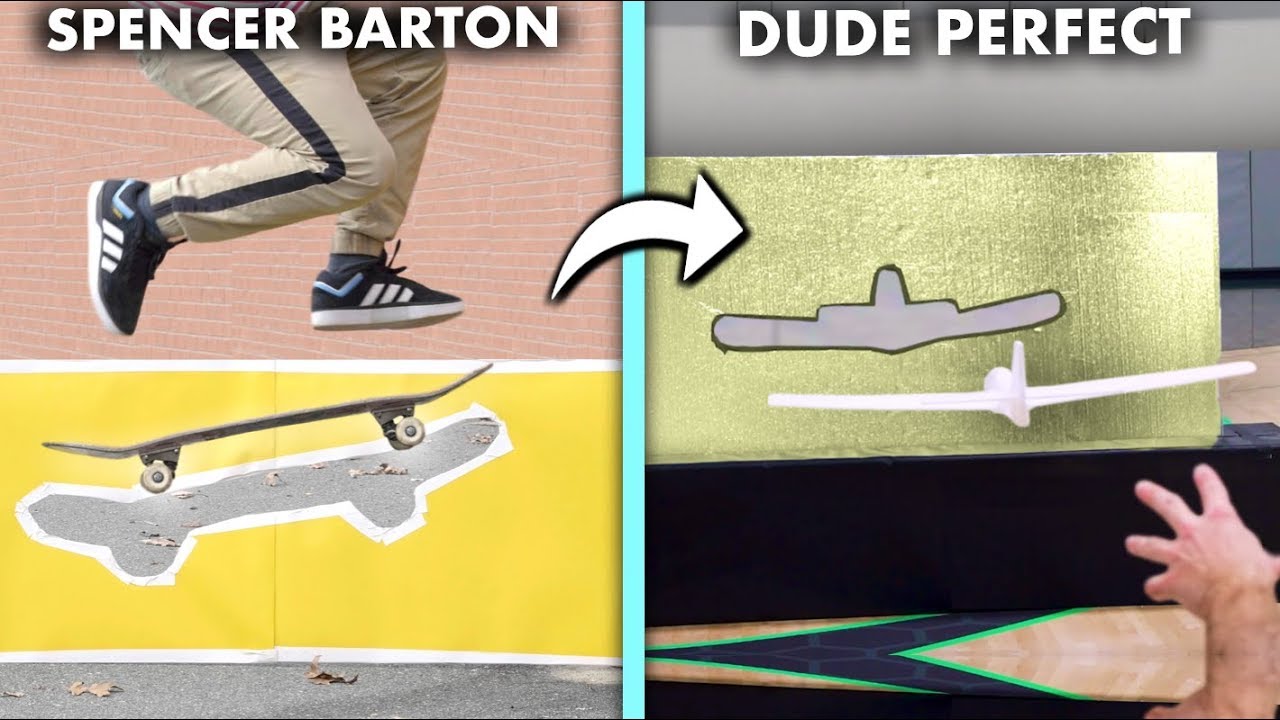
The phrase "turning tricks" weaves through language like a chameleon, shifting meanings from street slang to athletic prowess and circus spectacle. What begins as a seemingly simple expression in one context can carry entirely different weight in another, revealing layers of cultural stigma, skill mastery, and even deception. From the gritty alleyways of urban legends to the polished floors of Olympic arenas, its evolution mirrors society’s shifting values and the blurred lines between performance and survival.
Historically rooted in early 20th-century slang, the term has morphed into a linguistic puzzle, reflecting how words adapt to serve hidden economies, artistic innovation, and everyday metaphors. Whether it’s a skateboarder defying gravity, a politician manipulating public trust, or a sex worker reclaiming agency, "turning tricks" exposes the duality of human ingenuity—both its brilliance and its exploitation. Unpacking its definitions demands a journey through time, discipline, and societal taboos, where every context rewrites the story.
Definition and Core Meaning of "Turning Tricks"

The phrase "turning tricks" is a versatile expression that spans multiple contexts—from literal acrobatics to metaphorical deception—reflecting its deep-rooted adaptability in language. At its core, the term encapsulates both physical skill and strategic maneuvering, often carrying connotations of performance, cunning, or expertise. Its evolution mirrors broader cultural shifts, from early 20th-century street slang to its modern usage in sports, entertainment, and even digital spaces. Understanding its layered meanings requires dissecting its historical trajectory, regional variations, and thematic intersections with deception, mastery, and spectacle.
Literal and Figurative Interpretations Across Contexts
The phrase "turning tricks" operates on a spectrum, blending concrete and abstract interpretations. In physical contexts, it refers to executing specific maneuvers—whether in circus arts, martial arts, or sports—where "tricks" denote practiced techniques. Figuratively, it extends to strategic moves, such as outsmarting opponents in negotiations or politics, or even digital "hacks" in cybersecurity. The duality stems from the word "trick", which historically denoted both a deceptive act (e.g., sleight of hand) and a skilled performance (e.g., juggling). This ambiguity allows the phrase to function as both a praise (e.g., "He’s turning tricks on the basketball court") and a criticism (e.g., "She’s turning tricks with the data").
The circus and vaudeville traditions of the 19th and early 20th centuries cemented the association between "tricks" and physical prowess. Performers like P.T. Barnum and The Great Lafayette popularized acrobatic feats, embedding the term in American and European slang. Meanwhile, street slang in the 1920s–1950s repurposed "turning tricks" to describe prostitution (e.g., "She’s turning tricks for cash"), a usage that persists in urban dialects today. The phrase’s adaptability lies in its ability to convey both skill and moral ambiguity, depending on the audience and intent.
Historical Evolution: From Early Slang to Modern Usage
The phrase "turning tricks" traces its origins to early 20th-century American English, emerging in urban environments where slang evolved rapidly. By the 1920s, it appeared in jazz culture and speakeasy lingo, often tied to deception or illicit activities. The Chicago School of Sociology documented its use in Prohibition-era criminal slang, where "tricks" referred to illicit transactions—whether in gambling, bootlegging, or sex work.
Table of Contents
- Definition and Core Meaning of "Turning Tricks"
- Literal and Figurative Interpretations Across Contexts
- Historical Evolution: From Early Slang to Modern Usage
- Cultural and Regional Variations in Meaning
- Intersections with Themes of Deception, Performance, and Skill Mastery
- "Turning Tricks" in Street Slang and Prostitution Context: Language, Stigma, and Resistance
- Dominant Associations and Underground Usage
- Psychological and Social Implications of the Term
- Cross-Cultural and Linguistic Variations
- Key Moments in Media and Activism: A Timeline
- Turning Tricks in Sports and Athletic Performance
- Advanced Maneuvers and the Language of Athletic Innovation
- Step-by-Step Breakdown: The Skateboard Kickflip
- Terminology Across Athletic Disciplines
- Creativity and Risk: The Pressure to Innovate
- Social Media and the Viral Trick Economy
- Circus Arts, Performance, and the Art of "Turning Tricks"
- Historical Evolution of "Turning Tricks" in Circus Culture
- Visual Description of a Circus Act Relying on "Turning Tricks"
- Training Methods: Circus Tricks vs. Other Performance Arts
- Circus Jargon: Phrases for "Turning Tricks"
- Mental and Physical Demands: Insights from Circus Trainers
- Metaphorical and Idiomatic Uses of "Turning Tricks": Language, Strategy, and Satire
- Strategic Manipulation in Business and Politics
- Idiomatic Expressions Featuring "Tricks" and "Turning"
- Scenarios Where "Turning Tricks" Applies Metaphorically
- Humor and Satire: The Double-Entendre of "Turning Tricks"
In the 1950s–1970s, the term transitioned into sports and entertainment jargon, particularly in boxing and wrestling, where "turning tricks" described elusive maneuvers or showmanship. Muhammad Ali’s famous line "Float like a butterfly, sting like a bee" (1966) subtly invokes the idea of "turning tricks" in combat. Meanwhile, hip-hop culture in the 1980s–1990s revived the phrase’s streetwise connotations, with artists like Tupac Shakur referencing it in lyrics about survival and cunning (e.g., "I got tricks up my sleeve").
By the 2000s, "turning tricks" expanded into digital and corporate lexicons, describing cyber maneuvers (e.g., "hackers turning tricks on firewalls") or business strategies (e.g., "startups turning tricks with viral marketing"). This evolution reflects how language adapts to technological and cultural shifts, maintaining its core themes of performance, strategy, and adaptability.
Cultural and Regional Variations in Meaning
The interpretation of "turning tricks" varies significantly across geographies and social strata. In American English, the phrase retains dual meanings: positive (skill mastery) and negative (deception or exploitation). Urban dialects, particularly in Chicago, New York, and Los Angeles, lean toward the slang connotation, while rural and Southern dialects often associate it with mechanical or agricultural "tricks" (e.g., "fixing a tractor with a few tricks").
In British English, the phrase is less common but appears in slang related to deception (e.g., "He’s turning tricks with the evidence"). Australian and New Zealand English use it similarly, though "pulling a fast one" is more prevalent. African American Vernacular English (AAVE) preserves the Prohibition-era associations, often linking "turning tricks" to street-smart survival tactics.
Comparative Table: Interpretations of "Turning Tricks"
| Context | Definition | Example Sentence | Origin/Usage Period |
|---|---|---|---|
| Circus/Vaudeville | Executing acrobatic or illusion-based performances. | "The clown turned tricks with his assistant’s disappearance act, leaving the crowd in awe." |
Late 1800s–1950s (peak in early 20th century) |
| Street Slang (Prostitution) | Engaging in sex work for financial gain. | "She had to turn tricks to pay her rent during the Depression." |
1920s–Present (urban environments) |
| Sports (Boxing/Wrestling) | Performing evasive or flashy maneuvers. | "Ali’s footwork made him a master at turning tricks in the ring." |
1960s–Present (global sports culture) |
| Digital/Cybersecurity | Employing technical exploits or hacks. | "The hacker turned tricks on the firewall, bypassing security protocols." |
2000s–Present (tech-driven slang) |
| Business/Marketing | Using unconventional strategies for success. | "The startup turned tricks with influencer partnerships, going viral overnight." |
2010s–Present (corporate jargon) |
| Literary/Metaphorical | Employing rhetorical or psychological maneuvers. | "The politician turned tricks with his speeches, swaying undecided voters." |
1940s–Present (political and media discourse) |
Intersections with Themes of Deception, Performance, and Skill Mastery
The phrase "turning tricks" consistently intersects with three key themes: deception, performance, and mastery. In deceptive contexts, it implies manipulation or subterfuge, as seen in con artistry or legal maneuvering. For example, Oscar Wilde’s play The Importance of Being Earnest (1895) features characters who "turn tricks" with identities, playing on the duality of performance and fraud.
In performance-based fields, such as magic or theater, "turning tricks" celebrates artistic skill. Harry Houdini, the escape artist, was often described as "turning tricks" with his restraints, blending spectacle and technical prowess. Similarly, breakdancing in the 1980s (e.g., Michael Jackson’s "Moonwalk") was framed as "turning tricks" on stage, merging athleticism and showmanship.
The mastery theme emerges in martial arts and sports, where "tricks" represent refined techniques. Bruce Lee’s Jeet Kune Do philosophy emphasized "turning tricks" in combat as a fusion of instinct and precision. Even in video games, terms like "pulling off a trick shot" in NBA 2K or *Mario Kart
"Turning Tricks" in Street Slang and Prostitution Context: Language, Stigma, and Resistance
The phrase "turning tricks" is deeply embedded in the lexicon of sex work, serving as both a coded reference to transactional sex and a loaded term that reflects broader societal attitudes toward prostitution. In underground communities, online forums, and mainstream media, its usage oscillates between normalization and stigmatization, exposing the tension between criminalization and decriminalization, visibility, and erasure. While some sex workers adopt the term as part of their occupational identity, others reject it as a relic of exploitative language that reinforces marginalization. This section explores how the phrase functions as a linguistic battleground—where power dynamics, activism, and cultural context collide—to shape perceptions of sex work, its workers, and the industries surrounding it.
Dominant Associations and Underground Usage
In street slang, "turning tricks" is a shorthand for engaging in paid sexual services, often used in contexts where discretion is necessary—whether among peers in the industry, clients, or law enforcement. The term’s prevalence in underground communities stems from its dual purpose: as a marker of insider knowledge and as a means to obscure explicit references in public or semi-public spaces. Online forums, such as Reddit’s r/sexwork or niche boards dedicated to escorting, frequently employ the phrase, though its usage varies by subcommunity. For example, in discussions about safety protocols, workers might refer to "tricks" as clients without explicitly naming the transaction, while others use it ironically or defiantly to reclaim agency. Media portrayals, particularly in true-crime documentaries or investigative journalism, often amplify the term’s criminalized connotations, framing sex workers as victims or perpetrators rather than laborers.
The phrase’s persistence in slang reflects its adaptability across subcultures, from pimps and madams to independent workers navigating digital platforms like OnlyFans or FetLife. However, its dominance also underscores the industry’s historical ties to exploitation, where language itself becomes a tool of control. For instance, the term "trick" originates from 19th-century American slang, where it referred to a deceptive act or a gullible person—echoing the ways sex workers were (and often still are) perceived as being duped or complicit in their own subordination.
Psychological and Social Implications of the Term
The linguistic framing of sex work as "turning tricks" carries significant psychological and social weight, influencing how workers perceive themselves and how the public views the industry. Psychologically, the term can reinforce internalized stigma, particularly for those who enter the field due to economic necessity rather than choice. Studies on sex workers’ mental health, such as research published in the Journal of Sex Research, highlight how derogatory or objectifying language contributes to feelings of shame, isolation, and self-blame. Workers who internalize phrases like "trick" may struggle with dissociation between their professional and personal identities, as the term reduces their labor to a transactional act devoid of skill or dignity.
Socially, the phrase perpetuates the myth that sex work is inherently degrading or criminal. Public perception often conflates "turning tricks" with exploitation, ignoring the agency of workers who choose the industry or rely on it as a viable economic option. This stigma is exacerbated in regions where prostitution is criminalized, leading to increased risks of violence, harassment, and police abuse. For example, a 2018 report by Amnesty International found that criminalization policies in countries like the U.S. and parts of Europe push sex workers further underground, where they are more vulnerable to coercion and abuse—yet the language used to describe them remains mired in criminalizing rhetoric.
Conversely, in regions where sex work is decriminalized or legalized—such as parts of Germany, the Netherlands, or New Zealand—the connotations of "turning tricks" shift. Workers in these contexts may adopt the term more neutrally, treating it as occupational jargon akin to "serving customers" in other industries. However, even in progressive environments, the phrase retains traces of its stigmatized past, particularly when used by outsiders. The duality of its meaning underscores how language adapts to legal and cultural frameworks, yet its core associations often lag behind policy changes.
Cross-Cultural and Linguistic Variations
The usage and connotation of "turning tricks" vary significantly across languages and cultures, particularly in relation to the legal status of prostitution. In countries where sex work is decriminalized or regulated—such as Germany’s ProstG (Prostitution Act) or New Zealand’s 2003 decriminalization—workers and the public may use more clinical or neutral terms. For example: - In German, the phrase "Stricher machen" (literally "to do tricks") exists but is less dominant than in English-speaking contexts. Instead, workers might refer to "Kundschaft annehmen" (accepting clients) or "Prostitution ausüben" (practicing prostitution), reflecting a more professionalized discourse. - In Dutch, the term "trucjes draaien" is rare; instead, "klanten ontvangen" (receiving clients) or "in de seksindustrie werken" (working in the sex industry) prevails, aligning with the country’s legalized brothel model. - In Japanese, the phrase "jigoku" (地獄, "hell") is sometimes used colloquially to describe the sex industry, but the term "sōshoku" (売春, prostitution) dominates in both legal and slang contexts, with less emphasis on the "trick" metaphor.
In contrast, in English-speaking cultures where prostitution is criminalized or partially criminalized (e.g., the U.S., UK, or Australia), "turning tricks" remains entrenched in slang, often carrying overtly negative or criminal associations. The term’s persistence in these regions reflects deeper societal taboos around sex work, where even decriminalization efforts (like those in parts of Nevada or New South Wales) struggle to shift linguistic norms. For instance, in the U.S., the phrase is frequently used in law enforcement reports or courtroom testimonies, reinforcing its ties to illegality. Meanwhile, in Scandinavian countries with the "Nordic Model" (which criminalizes buyers but not sellers), the term "sälja sex" (selling sex) is more common, though activists argue that even this phrasing can imply commodification.
Key Moments in Media and Activism: A Timeline
The phrase "turning tricks" has become a focal point in debates about sex workers’ rights, often surfacing in media scandals, legal battles, and activist campaigns. Below is a timeline of pivotal moments where the term played a central role in shaping public and policy discourse:
- 1970s–1980s: The Rise of Sex Worker Activism and Media Portrayals The term gained prominence in feminist and sex worker rights movements, particularly through the work of groups like COYOTE (Call Off Your Old Tired Ethics) in the U.S. and X: Women’s International League for Freedom of the Press. Documentaries like "Whores’ Glory" (1979) used the phrase to challenge moralistic narratives, framing sex workers as political actors rather than victims. However, mainstream media often sensationalized the term, linking it to crime and corruption.
- 1990s: The Internet Era and the Birth of Online Sex Work The emergence of platforms like Craigslist’s "Erotic Services" section (launched in 2000) and early escort websites popularized "turning tricks" in digital spaces. The term became a shorthand for navigating online sex work, but it also drew scrutiny from law enforcement. In 2010, the Stop Enabling Sex Traffickers Act (SESTA) in the U.S. targeted websites facilitating sex work, with "tricks" and "trick money" frequently appearing in legal arguments about exploitation vs. consent.
- 2010s: The #MeToo Movement and the Reclamation of Language The #MeToo movement brought renewed attention to the language used around sex work, with many survivors and workers rejecting terms like "trick" as inherently dehumanizing. In 2017, Amnesty International’s global campaign for sex workers’ rights highlighted how criminalizing language—including "turning tricks"—contributes to violence. Meanwhile, documentaries like "Very Easy" (2019) and "Exit" (2019) used the term to explore the lived experiences of workers, though often with mixed reactions from the community.
-
2020s: Decriminalization Wins and the Push for Neutral Language
In 2022, New Zealand’s decriminalization of sex work became a landmark victory, with activists advocating for language that centers workers’ autonomy. The term "turning tricks" was largely absent from official discussions, replaced by phrases like "providing sexual services." Concurrently, the U.S.
Turning Tricks in Sports and Athletic Performance
The phrase "turning tricks" transcends its controversial origins in street slang, evolving into a celebrated term in the lexicon of extreme sports and athletic disciplines. In skateboarding, BMX, gymnastics, and parkour, it describes the execution of advanced maneuvers that blend precision, creativity, and physical mastery. Unlike its stigmatized connotations, here, "turning tricks" signifies innovation, pushing the boundaries of what’s physically possible while captivating audiences. Athletes in these fields don’t just perform stunts—they invent them, turning risk into artistry and turning the ordinary into the extraordinary. This section explores how the phrase manifests across sports, dissects the mechanics behind legendary tricks, and examines the cultural and technological forces reshaping its perception.Advanced Maneuvers and the Language of Athletic Innovation
In sports where gravity and momentum are constant challenges, "turning tricks" refers to executing complex, often gravity-defying movements that require split-second timing, spatial awareness, and bodily control. The term is deeply embedded in disciplines where athletes are judged not just on skill but on their ability to redefine skill. For example: - Skateboarding’s kickflip redefines board control by flipping the board 360 degrees mid-air while the rider jumps, landing back on it.
- Gymnastics’ double-back dismount involves two full twists in the air before a controlled landing, demanding core strength and aerial precision.
- Parkour’s precision vaults transform obstacles into fluid, acrobatic transitions, blending strength and agility. These tricks are not just physical feats; they are linguistic achievements, each with its own vernacular. Skateboarders "land a trick," BMX riders "pull off a combo," and gymnasts "execute a routine with clean dismounts." The phrase "turning tricks" unifies these disciplines under a shared ethos: the pursuit of the impossible through calculated risk.
- Stance and Approach: The rider approaches the tail of the skateboard with their front foot near the bolts and the back foot near the tail. The board should be stationary, with the rider crouched slightly for balance.
- Pop and Flip: The rider slams the tail down while flicking the front foot upward and outward. This motion lifts the board into the air and initiates the flip. The angle of the flick determines the board’s rotation speed.
- Aerial Control: Mid-air, the rider must keep their feet positioned to catch the board’s underside. The back foot guides the board’s spin, while the front foot prepares for landing. Timing is critical—too early or late, and the board spins out of control.
- Landing: The rider jumps slightly higher than the board’s peak to absorb the impact. Upon landing, the back foot touches first, followed by the front foot, with knees bent to distribute force. A successful kickflip ends with the board flat on the ground, ready for the next trick.
- Tony Hawk (Skateboarding Legend): "The best skaters aren’t just copying tricks—they’re inventing them. Every time you step on a board, you’re either adding to the culture or repeating what’s already been done."
- Simone Biles (Gymnastics Icon): "I don’t do tricks just for the crowd. I do them because they scare me. That’s where the magic happens—when you push past fear."
- Nyein Chan Aung (BMX Rider): "In BMX, if you’re not falling, you’re not trying hard enough. But it’s not about the falls—it’s about how you get back up and try something crazier." This mindset is fueled by competitive culture and the desire for immortality—being the first to land a trick that becomes a benchmark (e.g., skateboarder Tony Alva’s "Airwalk" or gymnast Simone Biles’ "Yurchenko Double Pike"). Social media accelerates this pressure, as athletes now compete not just against each other but against viral moments captured in 15-second clips.
- Shorten the learning curve through tutorial videos (e.g., Skateboarder Boo Berry’s guides).
- Gamify progression with milestones (e.g., "100-day trick challenge").
- Leverage failures for engagement (e.g., parkour fails that go viral for their creativity). However, this visibility comes with scrutiny. Athletes must balance authenticity with marketability, leading to debates about:
- Over-commercialization: Are tricks becoming "products" rather than personal achievements?
- Safety vs. spectacle: Does the pursuit of likes encourage reckless behavior?
- Accessibility: While tricks spread globally, mastering them often requires expensive equipment or private coaching, creating a divide between amateur and professional trick-turners.
- Victorian Era (1800s): Tricks were often tied to freak shows and daredevil stunts (e.g., sword swallowing, fire breathing).
- Modern Circus (1950s–1990s): Acrobatic troupes like Russian State Circus refined tricks into synchronized, narrative-driven acts.
- Contemporary Circus (2000s–Present): Artists like Alberto Blanco (aerialist) and Company M.A.S.H. blend circus tricks with contemporary dance, using props like hoops, straps, and lyra to create immersive experiences.
- Silks: Act as both a harness and a dynamic tool; their drag and elasticity create resistance, enabling spins and drops.
- Audience Interaction: Performers often make eye contact or extend limbs toward spectators, turning the trick into a shared experience.
- Physics Involved:
- Centripetal Force: Spinning generates outward force, which the silks counteract.
- Momentum Conservation: The performer’s body must align with the fabric’s swing to avoid collisions.
- Grip Strength: Handholds must endure 300–500 lbs of force during inversions. A well-executed trick like the "silk wrap"—where the performer twists the fabric around their body while suspended—demands core strength, flexibility, and spatial awareness. The act’s climax might feature a backflip off the silks, landing with precision on a springboard or padded mat, leaving the audience breathless.
- Physical Conditioning:
- Strength: Customized for grip endurance, core stability, and explosive power (e.g., pull-ups on straps, handstand push-ups).
- Flexibility: Daily splits, backbends, and shoulder mobility drills to prevent injuries.
- Balance: Slacklining, tightrope practice, and one-handed holds to refine proprioception.
- Technical Skills:
- Prop Mastery: Learning to manipulate hoops, Chinese poles, or trapeze bars with muscle memory.
- Air Awareness: Training in free-falling techniques to anticipate landings.
- Mental Preparation:
- Visualization: Performers mentally rehearse tricks to reduce stage fright.
- Risk Assessment: Calculating safe limits for each trick (e.g., how many spins before fatigue sets in). Comparison to Other Arts:
- "Working a Trick": Refining a move until it’s flawless, often involving repetition and incremental difficulty.
- "Selling a Trick": Performing with theatrical flair to maximize audience reaction (e.g., pausing before a drop to build tension).
- "Pulling a Crowd with a Trick": A trick so impressive it draws applause or gasps, becoming a signature of the act.
- "The Big Finish": The climactic trick of a routine, designed to leave a lasting impression.
- "Going for the Gold": Attempting a high-risk, high-reward trick (e.g., a backflip off a lyra).
- "Taking a Spill": Slang for falling or crashing during a trick (often downplayed in performances). In aerial arts, performers might say they’re "threading the needle" (navigating a tight space between props) or "reading the fabric" (understanding how the silks will move). These terms reveal the meticulous planning behind what appears spontaneous.
- Overuse Injuries: Repeated wrist hyperextension (common in hand balancers) or rotator cuff strain (from trapeze work) can sideline performers for months.
- Impact Forces: Landing from a 10-foot drop generates 6–8 G-forces, equivalent to a car crash at 30 mph.
- Fatigue Management: Performers must pace themselves to avoid muscle failure mid-act (e.g., a silk artist’s grip weakens after 30 minutes). Mental Challenges:
- Fear of Heights: Acrophobia is common among aerialists; some use ground-based simulations (e.g., hanging from a harness on the floor) to build confidence.
- Perfectionism: The pressure to execute flawlessly can lead to burnout or performance anxiety.
- Adaptability: Tricks must be improvised if props fail (e.g., a silk snapping mid-performance). Recovery Techniques:
- Active Recovery: Yoga
- Negotiations and Diplomacy In high-stakes negotiations, parties often "turn tricks" by leveraging psychological tactics, such as anchoring (setting an initial extreme position to influence outcomes) or good cop/bad cop routines. Diplomats accused of "turning tricks" may be those who exploit loopholes in treaties or use emotional appeals to bypass rational debate. For instance, a trade agreement criticized for favoring one nation over another might be dismissed as a case of "turning tricks" to secure short-term gains.
- Marketing and Advertising Companies frequently "turn tricks" in advertising by using misleading claims, subliminal messaging, or exaggerated testimonials to influence consumer behavior. A product advertised as "miracle cure" without scientific backing could be seen as "turning tricks" on vulnerable buyers. Similarly, influencer marketing that hides sponsorships or exaggerates results falls into this category, where the phrase critiques the performative nature of persuasion.
- Personal Relationships In interpersonal dynamics, "turning tricks" can describe manipulative behaviors such as gaslighting, selective honesty, or playing the victim to avoid accountability. A partner who alternates between affection and guilt-tripping to control decisions might be accused of "turning tricks" in their relationship. The phrase here underscores the erosion of trust when one party prioritizes their own interests over genuine connection.
- Legal and Judicial Systems Within the legal system, lawyers or judges accused of "turning tricks" may be those who exploit procedural technicalities, delay tactics, or biased interpretations to sway outcomes. For example, a defense attorney who stalls a trial to wear down the prosecution or a judge who ignores evidence due to personal bias could face accusations of manipulating the process. The phrase here highlights the tension between justice and the strategic exploitation of legal frameworks.
- Sports and Competitive Environments Even in sports, "turning tricks" can refer to athletes or coaches who bend rules, use psychological warfare, or exploit referee biases to gain unfair advantages. A soccer team accused of "turning tricks" might be one that simulates fouls to disrupt play or uses verbal intimidation to unsettle opponents. The metaphor extends to esports, where players exploit glitches or cheat to dominate matches.
Step-by-Step Breakdown: The Skateboard Kickflip
To illustrate the depth of skill required, let’s dissect the kickflip, one of skateboarding’s most iconic tricks. Mastery of this maneuver reveals why "turning tricks" is synonymous with athletic innovation."A kickflip isn’t just a trick—it’s a conversation between you and the board. You’re not just flipping it; you’re talking to it, telling it what to do." — Nyjah Huston, 13-time X Games medalist.The kickflip’s simplicity belies its complexity. It requires 300+ muscle engagements, precise foot placement, and an understanding of rotational physics. Mistakes lead to falls, reinforcing why "turning tricks" in sports demands both physical and mental discipline.
Terminology Across Athletic Disciplines
The phrase "turning tricks" shares roots with similar expressions in other physical domains, each reflecting the discipline’s unique demands:| Sport | Example Trick | Skill Level Required | Cultural Significance |
|---|---|---|---|
| Skateboarding | Kickflip, Heelflip | Intermediate to Advanced | Symbolizes individualism and rebellion; tricks are often named after pioneers (e.g., "Ollie" after Alan "Ollie" Gelfand). |
| BMX | Double Backflip, Tailwhip | Advanced | Represents raw power and aerial dominance; BMX culture celebrates "big air" and creativity. |
| Gymnastics | Double Layout (Dismount) | Elite | Reflects precision and artistry; judges score based on execution, difficulty, and risk. |
| Parkour | Precision Vault Over Bar | Advanced to Expert | Emphasizes fluidity and problem-solving; tricks are often improvised based on environment. |
| Surfing | Cutback, Air Reverse | Intermediate to Advanced | "Pulling a move" describes carving turns or aerial maneuvers; tied to wave mastery and style. |
| Football | No-Look Pass, End-Zone Dance | Pro/Elite | "Executing a play" refers to strategic moves; celebrations (e.g., "trick plays") add flair. |
Creativity and Risk: The Pressure to Innovate
Sports where "turning tricks" thrives are breeding grounds for creativity, but they also demand calculated risk. Athletes face immense pressure to innovate, not just to outperform rivals but to redefine what’s possible. This tension is palpable in interviews with elite athletes:Social Media and the Viral Trick Economy
Platforms like TikTok, YouTube, and Instagram have democratized the concept of "turning tricks," transforming athletic innovation into a global spectator sport. Trends like "trick compilations" (e.g., skateboarders like James Kelly’s "Kelly Crags" videos) or #GymnasticsTok challenges have turned tricks into shareable content. The algorithm rewards high-risk, high-reward moments, incentivizing athletes to:*"Social media changed skateboarding. Now, every kid thinks they can land a 1080 flip because they saw it on YouTube. But the grind is real—it’s not justCircus Arts, Performance, and the Art of "Turning Tricks"
The circus has long been a crucible of human ingenuity, where the phrase "turning tricks" transcends its colloquial meanings to become a celebration of skill, daring, and theatrical spectacle. From the 18th-century foires of France to the neon-lit big tops of modern circus arts, performers have honed their craft by mastering physical feats that push the boundaries of human capability. Unlike street slang or athletic jargon, circus culture treats "turning tricks" as both a craft and a performance art—where precision, storytelling, and audience engagement merge into a seamless act. This section explores the historical roots of circus trickery, the mechanics of high-flying performances, and the rigorous training that transforms raw talent into breathtaking artistry.Historical Evolution of "Turning Tricks" in Circus Culture
The origins of "turning tricks" in circus culture trace back to the early sideshows of Europe, where performers like Philippe Petit (the high-wire artist) and Charles Blondin (the tightrope walker) turned physical prowess into theatrical gold. By the 19th century, circuses like P.T. Barnum’s elevated trickery into grand spectacles, blending acrobatics, animal acts, and human curiosities. The phrase itself emerged organically—performers "turned" movements into tricks, selling their skills to captivated audiences. In the 20th century, new circus movements (e.g., Cirque du Soleil) redefined trickery as a fusion of dance, theater, and athleticism, stripping away the carnival trappings to focus on pure performance art. Circus historians note that the evolution of "turning tricks" mirrors broader shifts in entertainment:Visual Description of a Circus Act Relying on "Turning Tricks"
Consider the aerial silks act, a modern circus staple where performers defy gravity using flowing fabric suspended from overhead rigging. The act begins with the artist ascending a ladder or pole, gripping two silks draped 12–15 feet above the ground. The fabric, typically satin or nylon, must support the performer’s weight while allowing fluid movement. As the music swells, the artist inverts mid-air, spinning in a helix shape while controlling the silks’ momentum. A key trick involves the "dead drop"—a sudden release of tension where the performer free-falls before the silks catch them, requiring split-second timing. Props and Physics:Training Methods: Circus Tricks vs. Other Performance Arts
Circus performers undergo decades of specialized training, often beginning in childhood under rigorous discipline. Their regimens differ markedly from those in magic or theater, where tricks are often illusions or scripted movements. Circus Training Focus:Circus artists often train under master coaches who break tricks into micro-movements, similar to how dancers learn choreography. For example, a trapeze artist might start with static holds, progress to swings, and finally attempt catch releases—where they leap from one trapeze to another mid-air.
Aspect Circus Tricks Magic Theater Primary Focus Physical execution Illusion design Dialogue/physicality Training Time 10+ years (often from childhood) 5–10 years (varies by act) 2–4 years (acting school) Injury Risk High (sprains, fractures, concussions) Low (tool-related injuries) Moderate (overuse, vocal strain) Audience Engagement Direct (physical spectacle) Indirect (misdirection) Dialogue-driven Circus Jargon: Phrases for "Turning Tricks"
Circus culture has developed a unique lexicon to describe the creation, execution, and reception of tricks. Some terms reflect the artistry, while others highlight the business of spectacle:Mental and Physical Demands: Insights from Circus Trainers
Mastering circus tricks is a marathon of physical and psychological endurance. Trainers emphasize that injury prevention is as critical as skill development. Physical Challenges:Metaphorical and Idiomatic Uses of "Turning Tricks": Language, Strategy, and Satire
The phrase "turning tricks" transcends its literal and slang-based meanings, embedding itself deeply into everyday language as a versatile metaphor for manipulation, skillful maneuvering, and even deception. Unlike its explicit associations with performance or prostitution, the idiomatic and figurative applications of "turning tricks" reveal how language adapts to critique power dynamics, celebrate ingenuity, or expose hypocrisy. In business, politics, and personal interactions, the phrase functions as a shorthand for strategic deception—whether through charm, misdirection, or calculated moves. Meanwhile, idiomatic expressions involving "tricks" and "turning" reflect cultural anxieties about trust, authority, and the blurred line between cunning and competence. This section explores how the phrase operates as a linguistic tool to dissect manipulation in corporate boardrooms, political campaigns, and even casual conversations, while also examining its role in humor and satire as a double-edged sword that can expose truth or reinforce stereotypes.Strategic Manipulation in Business and Politics
In corporate and political spheres, "turning tricks" often carries a derogatory connotation, implying that individuals or organizations employ underhanded tactics to achieve their goals. A politician accused of "turning tricks" may be criticized for using misleading rhetoric, selective facts, or performative gestures to sway public opinion rather than addressing substantive issues. Similarly, a corporation accused of "turning tricks" might be exposed for greenwashing—presenting environmentally friendly initiatives while continuing harmful practices—or for manipulating market data to inflate stock values. The phrase underscores a broader cultural skepticism toward authority figures who prioritize image over integrity. For example, during election cycles, journalists and pundits frequently scrutinize candidates for "turning tricks" by exploiting emotional narratives rather than policy debates. A politician who shifts stances on key issues to appeal to different voter blocs might be labeled as "turning tricks" to avoid accountability. In business, a CEO accused of "turning tricks" could be one who uses aggressive lobbying to bypass regulations or engages in aggressive mergers that benefit shareholders at the expense of workers. The metaphorical weight of the phrase lies in its ability to collapse complex behaviors—such as spin doctoring or financial chicanery—into a single, morally charged accusation."Turning tricks" in politics is less about policy and more about performance—crafting a persona that distracts from the substance.The duality of the phrase is particularly striking: while a magician "turning tricks" is celebrated for their skill, a politician or executive doing the same is often condemned for their dishonesty. This contrast highlights how language frames certain forms of manipulation as art (entertainment) and others as corruption (deception). The line between the two is thin, and the phrase serves as a linguistic mirror reflecting societal values about transparency and authenticity.Idiomatic Expressions Featuring "Tricks" and "Turning"
Language is replete with idioms that incorporate "tricks" or "turning," each carrying nuanced implications about deception, adaptability, or moral ambiguity. These expressions often function as shorthand for complex social dynamics, revealing how cultures encode distrust or admiration for strategic behavior. Below are key idioms and their contextual meanings:"Playing tricks on someone" – Deliberately deceiving or misleading another person, often for amusement or gain. Example: "The salesman played tricks on the customer by hiding the fine print in the contract.""Turning a blind eye" – Ignoring unethical or illegal behavior, often to avoid complicity. Example: "The board turned a blind eye to the company’s labor violations for years.""Pulling a fast one" – Executing a swift or deceptive maneuver to gain an advantage. Example: "The hackers pulled a fast one by exploiting a software vulnerability before the patch was released.""Working like a charm" – A phrase that ironically contrasts with the negative connotations of "tricks," suggesting effortless success. Example: "Her negotiation skills worked like a charm, securing the deal in record time."These idioms illustrate how language compartmentalizes different types of manipulation. While "playing tricks" and "pulling a fast one" imply active deception, "turning a blind eye" suggests passive complicity. The phrase "working like a charm" further complicates the narrative by framing strategic behavior as benign or even virtuous, depending on the context. Such linguistic flexibility allows speakers to navigate moral gray areas while still conveying clear judgments about intent.Scenarios Where "Turning Tricks" Applies Metaphorically
The versatility of "turning tricks" as a metaphor makes it applicable to a wide range of situations where strategic maneuvering—whether ethical or unethical—is at play. Below are scenarios where the phrase resonates, categorized by domain:Each of these scenarios demonstrates how "turning tricks" functions as a catch-all term for behaviors that prioritize outcome over ethics, whether in institutional or personal contexts.
Humor and Satire: The Double-Entendre of "Turning Tricks"
Humor and satire frequently exploit the double entendres embedded in phrases like "turning tricks," using the term to critique hypocrisy, expose power imbalances, or simply provoke laughter. The phrase’s ability to oscillate between positive (skillful performance) and negative (deception) connotations makes it a rich target for comedic and satirical commentary. In political satire, cartoons often depict leaders "turning tricks"—such as a politician juggling policy promises like a magician’s props—while audiences recognize the underlying critique of broken promises. Memes on social media might contrast a politician’s polished public image with the phrase "turning tricks" in the comments section, reinforcing the idea that their actions are performative rather than substantive. For example, a viral meme showing a politician mid-speech with the caption "Turning tricks since 2010" plays on the duality of the phrase to mock years of perceived insincerity. Similarly, in corporate satire, advertisements or internal communications that promise "effortless success" while hiding labor exploitation might be labeled as "turning tricks" on employees or consumers. Stand-up comedians often joke about the absurdity of workplace culture, where employees are encouraged to "turn tricks"—i.e., perform emotionally labor-intensive tasks like fake enthusiasm or office politics—to climb the corporate ladder. The humor arises from the recognition that such "tricks" are not just unethical but also unsustainable, revealing the performative nature of professional success."Satire thrives on the tension between the literal and metaphorical—where 'turning tricks' can be both a celebration of skill and a condemnation of deceit."The phrase’s adaptability in humor underscores its role as"Turning tricks" emerges not just as a phrase but as a mirror to society’s contradictions—a celebration of skill in sports and circus arts, a burden of stigma in sex work, and a double-edged metaphor in politics and business. Its journey from underground slang to global vernacular underscores how language shapes—and is shaped by—power, performance, and perception. As athletes push boundaries, performers dazzle crowds, and activists reshape narratives, the phrase endures as a testament to humanity’s relentless drive to innovate, even when the stakes are survival, spectacle, or scandal. Understanding its many faces reveals more than words; it exposes the raw, unfiltered truths of what it means to master, manipulate, or merely endure.
Leave a Comment
Comments are moderated before appearing. The data you submit is processed according to the Privacy Policy of Velirium.